
What Is Triple Care Farm and How Does It Help Young People Recover?

When a young person is experiencing drug and alcohol dependency, treatment needs to reflect their age, circumstances and goals. Triple Care Farm provides an integrated pathway through withdrawal, residential rehabilitation and aftercare, rather than treating detox as the end of the process.
Operated by Mission Australia and supported by Sir David Martin Foundation as its major philanthropic funder, the program combines clinical care, counselling, education, practical skills and ongoing community support for young Australians aged 16–24.
What is Triple Care Farm?
Triple Care Farm is a youth-specific drug and alcohol treatment program for Australians aged 16–24 experiencing drug and alcohol dependency. It combines medically supported withdrawal, a 12-week residential rehabilitation program and up to six months of aftercare, helping young people address addiction, strengthen their wellbeing and develop skills for a healthier, more independent future.
The program provides a safe residential setting where young people can receive clinical and psychosocial care while working towards goals related to their health, relationships, education, employment and independent living. Support is tailored to each participant rather than following a single approach for everyone.
Young people who come to Triple Care Farm may also live with mental health challenges or the effects of trauma. The program recognises that recovery involves more than addressing substance use alone, so support may include medical care, counselling, case management, education, recreation and practical life skills tailored to each young person.
Who can benefit from Triple Care Farm?
Triple Care Farm is intended for young people aged 16–24 who are experiencing drug and alcohol dependency and can participate in the program. Applicants must be Australian residents or currently living in Australia, and they must complete the program before turning 25.
Participation is voluntary. A parent, carer, support worker or healthcare professional may help with a referral, but the young person must know about the application, agree to it and demonstrate commitment during assessment.
Where mental health challenges are also present, these can be considered as part of the young person’s individual treatment and support plan.
Admission is not automatic. Eligible applicants complete an interview and assessment, and approved applicants may need to wait until a suitable place becomes available.
How does Triple Care Farm support recovery?
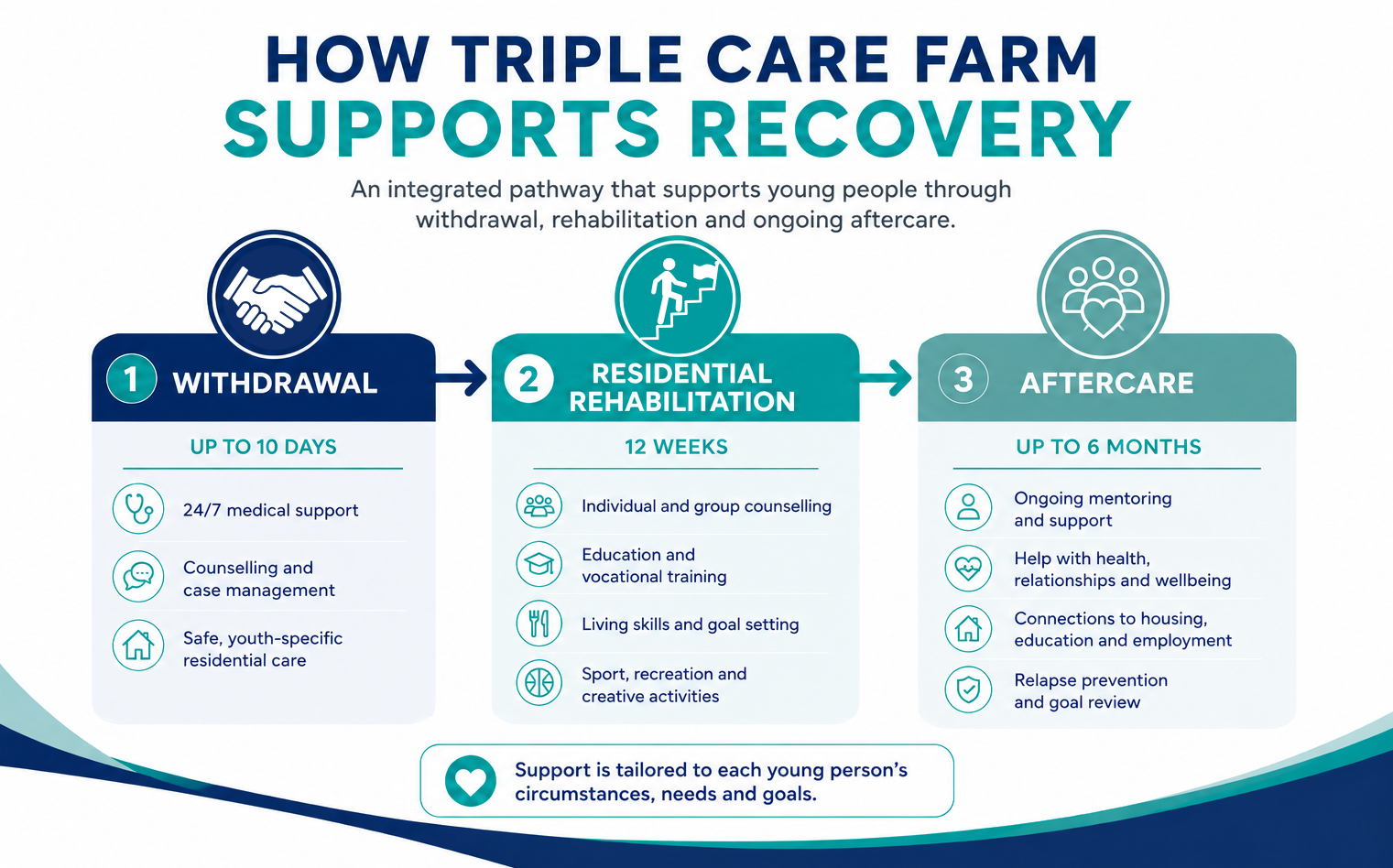
The Triple Care Farm program brings three connected stages together. A young person may enter through withdrawal or rehabilitation, while aftercare helps maintain continuity when they return to the community.
Withdrawal in a safe clinical setting
David Martin Place is Triple Care Farm’s youth-specific withdrawal facility. It provides up to 10 days of residential care with 24/7 medical support, helping young people withdraw from alcohol or other drugs safely.
Support can include medical care, counselling, case management, family support, education activities, sport and recreation, and nicotine replacement therapy when appropriate. Clinical oversight allows immediate withdrawal needs to be considered alongside the young person’s wider circumstances.
A young person may then move into Residential Rehabilitation or return to the community with Aftercare support, depending on their assessment and goals.
Residential rehabilitation for 12 weeks
The Residential Rehabilitation Program provides 12 weeks of structured youth drug and alcohol rehabilitation. Young people receive one-to-one counselling and group therapy, supported by counsellors, psychologists, case managers and other program staff.
Treatment is combined with practical daily experiences. Participants may work on cooking, cleaning, budgeting, hygiene, communication and positive relationships. They can also take part in vocational education and training, employment preparation, creative activities, sport and recreation.
Plans are tailored to individual needs and goals. These may include rebuilding health, improving family relationships, returning to study, preparing for employment or developing greater independence.
Aftercare for up to six months
The transition out of residential treatment can bring new pressures. Young people may return to familiar triggers, unstable housing, difficult relationships or uncertainty around education and work.
The Aftercare Program provides up to six months of wraparound support after withdrawal and/or rehabilitation. A dedicated Aftercare Worker offers mentoring and practical assistance as the young person applies what they have learned in everyday life.
Support may include reconnecting with healthcare, finding stable housing, attending appointments, returning to education, exploring employment and maintaining personal goals.
If you or someone you know is considering treatment, explore the Triple Care Farm program and its application requirements to understand which pathway may be suitable.
Why is a holistic approach important?
Stopping or reducing substance use is only one part of recovery. A young person may also need help with trauma, anxiety, depression, disrupted education, housing insecurity, family conflict or limited experience of independent living.
A holistic youth rehabilitation program considers how these areas interact. Clinical and therapeutic care can help a young person understand substance use, triggers and coping strategies. Education and vocational training can create realistic next steps. Living skills and structured routines can make returning to the community more manageable.
Understanding why youth-specific addiction treatment matters in recovery helps show why care should address substance use alongside mental health, trauma and a young person’s wider circumstances.
Individualised care also allows staff to respond to each young person’s circumstances and goals. After completing the program, Kyle* chose to move away from the environment and influences connected to his substance use. With support from his Aftercare Worker, he secured stable accommodation, connected with community health services and returned to work in his trade.
His experience reflects the role of Aftercare in helping young people turn the progress made during rehabilitation into meaningful changes in housing, employment, health and daily life.
*Name changed to protect privacy.
Skills young people can develop
Depending on their needs and goals, participants may develop skills in:
- Recognising triggers and using healthier coping strategies
- Communicating and building positive relationships
- Creating routines that support physical and mental wellbeing
- Cooking, cleaning, budgeting and personal care
- Participating in education or vocational training
- Preparing for employment and further study
- Navigating appointments, housing and community services
- Setting realistic goals and asking for help
These capabilities can support greater independence, but progress is personal and recovery does not follow the same timeline for everyone.
What makes Triple Care Farm different?
Triple Care Farm combines youth-specific clinical care with psychosocial support, education, living skills and ongoing aftercare. Its Residential Rehabilitation Program is accredited by the Australian Council on Healthcare Standards, and the model connects immediate treatment with community reintegration.
Mission Australia’s 2024 evaluations of Triple Care Farm recorded positive outcomes across substance use, wellbeing, housing, education and employment:
- 100% reduction in chronic substance use
- 70% reduction in suicide attempts
- 73% in secure and stable housing
- 69% engaged in employment
- 53% engaged in education
These results reflect the young people included in the evaluations and do not predict an individual participant’s experience. Recovery is influenced by personal circumstances, engagement and access to continuing care.
How to access Triple Care Farm
A young person can apply for themselves, or an application can be submitted with help from a family member, guardian or professional. Referrals are accepted from across Australia.
The process begins by checking eligibility and completing the application form. Professional referrers may also need to submit a risk assessment and relevant reports. After the forms have been submitted, the young person must contact the Triple Care Farm Intake Coordinator to continue the application process.
Potentially eligible applicants are invited to a video interview. The application is then reviewed by an assessment committee. If approved, the young person joins the waiting list until a place becomes available.
Current fees and arrangements for young people under government care are provided during the application process and can be discussed with the Intake Team.
The Triple Care Farm application page provides current forms and eligibility details. General enquiries can be directed through Sir David Martin Foundation’s contact page.
Stories from young people who have attended Triple Care Farm offer further insight into the different paths recovery can take.
Frequently asked questions
What is Triple Care Farm?
Triple Care Farm is a Mission Australia youth drug and alcohol treatment service supported by Sir David Martin Foundation as its major philanthropic funder. It offers withdrawal, 12-week residential rehabilitation and up to six months of aftercare.
Who is eligible for Triple Care Farm?
Applicants must generally be aged 16–24, be experiencing problematic drug or alcohol use, be able to participate, demonstrate voluntary commitment and be an Australian resident or currently living in Australia. Eligibility is confirmed through assessment.
How long does the program last?
The Withdrawal Program provides up to 10 days of care. Residential Rehabilitation runs for 12 weeks. Aftercare may continue for up to six months.
What support is available after rehabilitation?
A dedicated Aftercare Worker can provide mentoring and practical assistance with health, housing, education, employment, relationships and personal goals.
Is Triple Care Farm only for drug addiction?
No. The program supports young people experiencing problematic alcohol or other drug use and can also respond to mental health challenges that may be affecting their recovery.
How can someone apply?
Review the Triple Care Farm application process, complete the relevant forms and contact the Intake Coordinator after submission.
Meeting the basic criteria does not guarantee admission, as applications are assessed individually and places depend on availability.
Building a healthier future with the right support
Recovery is rarely a straight line, but young people should not have to navigate it alone. Triple Care Farm connects clinical treatment with counselling, education, practical skills and continuing support, giving participants time and space to work towards goals that matter to them.
Explore Triple Care Farm, review the application process or support Sir David Martin Foundation’s work helping young Australians access youth-specific addiction treatment and aftercare.



Share this article



Join our community
Subscribe to our newsletter for stories of impact, upcoming events, and ways to get involved.