
Many young people experiment with alcohol or other drugs at some stage. While experimentation does not always lead to ongoing problems, it can sometimes develop into patterns of use that begin affecting health, relationships, education and future opportunities.
For parents, carers and loved ones, it can be difficult to know when occasional use has become something more serious. Questions such as “Is this normal?” or “Should we be seeking help?” are common, particularly when the signs are not always obvious.
Building awareness of alcohol and other drug risks can help young people recognise potential problems earlier and make more informed decisions about their health and wellbeing through effective drug and alcohol education for youth. Not all alcohol or drug use means a young person has developed an addiction or requires intensive treatment. However, substance use may become a concern when it starts affecting everyday life.
According to Healthdirect’s guidance on helping someone who is misusing drugs or alcohol, alcohol or drug use can become problematic when it affects a person’s judgement, relationships, health, wellbeing, school attendance or work responsibilities. It may also become concerning when someone struggles to cut down, relies on substances to cope with daily life, or experiences withdrawal symptoms when they stop using.
The earlier concerns are identified, the more opportunities there may be to access support before challenges become more complex.Every young person’s situation is different, but there are some common signs that may indicate alcohol or drug use is having a negative impact.
These can include:
- noticeable changes in mood or behaviour
- withdrawing from family and friends
- declining school attendance or academic performance
- loss of interest in hobbies and activities
- changes in sleep patterns or energy levels
- financial difficulties
- increased secrecy
- risk-taking behaviour
- ongoing conflict at home, school or work
- difficulty reducing or stopping substance use
These signs do not automatically mean a young person has a substance use problem. Many can also be associated with mental health challenges, stress, social pressures or other difficulties. However, if several signs are occurring together or becoming more persistent, it may be worth seeking professional advice.Mental health challenges and substance use often influence one another.
Some young people may use alcohol or other drugs as a way of coping with anxiety, depression, trauma, stress or difficult emotions. In other situations, substance use itself may contribute to worsening mental health and emotional wellbeing.
Understanding the complex link between mental health and addiction can help families respond with compassion rather than judgment.

Starting a conversation about alcohol or drug use can feel uncomfortable. Many parents and carers worry about saying the wrong thing or damaging trust.
Approaching the conversation with care, respect and concern can help reduce defensiveness and create a more supportive environment. Guidance around supporting a loved one through addiction highlights the importance of planning conversations carefully, staying calm, focusing on specific behaviours rather than accusations, and encouraging professional support where appropriate.
It is important to remember that one conversation may not solve everything. Often, the goal is simply to keep communication open and help a young person feel supported rather than criticised.
Reducing shame and judgment can make it easier for young people to seek help, which is why open conversations about youth addiction are so important.There is no single event or behaviour that determines when treatment is needed.
Health professionals often consider a combination of factors when assessing whether a higher level of support could be beneficial. According to a review published in Pediatrics, these factors may include ongoing substance use, withdrawal symptoms, co-occurring mental health concerns, risk of relapse, readiness to make changes and whether a young person’s living environment is supporting recovery or contributing to ongoing challenges.
For some families, seeking support may involve speaking with a GP, counsellor or community service. For others, a more structured treatment program may be appropriate.
Importantly, seeking help does not mean waiting until a crisis occurs. Early intervention can help young people access support before problems become more severe.Many people assume treatment only begins when a young person reaches a crisis point. In reality, support can take many different forms depending on individual needs.
Treatment may include:
- individual counselling
- group therapy
- mental health support
- family involvement
- withdrawal support
- residential rehabilitation
- peer support
- education and vocational support
- life skills development
Some young people may benefit from community-based services that allow them to continue living at home while receiving support. Others may benefit from more structured programs that provide additional stability and therapeutic support.
One example is Triple Care Farm, a youth-specific residential treatment program operated by Mission Australia and funded by Sir David Martin Foundation. Designed for young people aged 16–24 experiencing challenges with alcohol and other drugs, the program combines withdrawal support, residential rehabilitation and aftercare with counselling, education, life skills development and opportunities to rebuild confidence, independence and connection to community.
Support is designed to address not only substance use, but also the broader challenges that can affect recovery, including mental health, education, employment and social connection.
Recovery is not simply about stopping alcohol or drug use.
For many young people, recovery also involves rebuilding confidence, strengthening relationships, developing healthy routines and reconnecting with education, employment and community.
Consistency, stability and positive daily habits can play an important role in maintaining progress over time, which is why routine and structure in supporting long-term recovery are often considered important parts of the recovery journey.Recognising that a young person may need support can feel overwhelming, but families do not have to navigate the situation alone.
Families looking for crisis support, youth mental health services, alcohol and other drug resources, and support specifically for loved ones affected by addiction can access a range of options through Sir David Martin Foundation’s Find Help directory.
Whether a young person requires early intervention, counselling, mental health support or more structured treatment, accessing the right support early can make a meaningful difference to their recovery journey.Knowing when to seek drug and alcohol treatment for a young person is rarely straightforward.
However, when substance use begins affecting health, relationships, education, wellbeing or future opportunities, it may be time to explore additional support.
Seeking help is not a sign of failure. It is often an important step towards understanding what a young person is experiencing and helping them access the support they need to move forward.
What Young Australians Are Talking About Most Right Now
Every year, thousands of young Australians share their experiences, concerns and hopes through the Mission Australia Youth Survey, Australia’s largest annual survey of young people aged 14 to 19.
In 2025, more than 17,000 young people participated, providing a snapshot of the issues affecting their lives today. The findings reveal a generation navigating financial pressures, mental health challenges and uncertainty about the future, while remaining hopeful about what lies ahead.
The 2026 Mission Australia Youth Survey is now open. If you’re aged 14 to 19, taking part is an opportunity to share your experiences and help shape the conversation around the issues affecting young Australians.
Cost of Living Remains the Biggest Concern
For the third consecutive year, cost of living was identified as the most important issue facing Australia today, with 64% of respondents selecting it as a major concern.
Concern about the cost of living has doubled over the past two years and reached the highest level recorded for any issue since the survey began asking this question in 2010.
While inflation has eased compared with previous years, many young people continue to feel the effects of rising household expenses. Housing costs, transport, utilities, education expenses and everyday essentials remain significant concerns for many families.
Recent reporting comparing grocery prices between 2022 and 2026 found that while some fresh produce prices have fallen, many household expenses continue to place pressure on family budgets. At the same time, higher housing costs, insurance premiums, utility bills and interest rates continue to affect disposable income for many Australians.
The survey found that 19% of young people agreed that their family is often stressed about money, highlighting how financial pressures continue to influence daily life and future planning.
Mental Health Continues to Be A Major Concern
Mental health ranked as the second most important issue facing Australia, with 29% of young people identifying it as a major national concern.
The survey also found that mental health and wellbeing were among the most common sources of personal stress. Nearly four in ten young people reported stress related to their mental health, while 19% scored in the high psychological distress range.
Mental health challenges can affect many aspects of life, including education, relationships, confidence and future planning. For some young people, mental health concerns may also occur alongside challenges such as substance use, family difficulties or social isolation.
For young people experiencing alcohol or other drug-related challenges, access to specialised support can be an important part of recovery. Sir David Martin Foundation is a major funder of Mission Australia’s Triple Care Farm, which provides youth-focused treatment, rehabilitation and recovery support for young people affected by substance use and related challenges.
Additional information and guidance can be found through our youth recovery resources.
Climate Change Remains Important to Young People
 Climate change and the environment ranked third among the issues young Australians consider most important, with 27% identifying it as a major national concern.
Many young people are growing up in a world increasingly shaped by conversations around extreme weather events, environmental sustainability and the long-term impacts of climate change. As they think about future careers, housing, education and family life, environmental concerns remain closely connected to how they view the future.
The continued prominence of climate change in the survey demonstrates that many young Australians are looking beyond immediate challenges and considering the world they will inherit.
Housing Affordability is Creating Uncertainty
Housing and homelessness was identified as a major concern by 25% of respondents.
For many young people, the prospect of renting or owning a home feels increasingly difficult. Rising property prices, limited housing availability and broader cost of living pressures have created uncertainty around future housing security and financial independence.
For many young people, the prospect of renting or owning a home feels increasingly difficult. Rising property prices, limited housing availability and broader cost of living pressures have contributed to growing concern about housing affordability and future housing security.
School, Study and Everyday Pressures

While national issues attract significant attention, the survey also explored the challenges young people face in their everyday lives.
According to the survey, school or study problems were the most commonly reported source of stress in the past year.
Young people are often balancing study, social relationships, part-time work, extracurricular activities and family responsibilities while also making important decisions about their future.
Although 62% of respondents agreed they like their school, school and study pressures continue to be one of the most common causes of stress for young Australians.
Despite Challenges, Young People Remain Hopeful
While the survey highlights significant concerns, it also reveals a strong sense of optimism.
Employment and career goals were the most common hopes for the future, followed by family relationships and financial stability.
These findings align with ReachOut’s research into how stress about the future impacts young people’s mental health, which found that 75% of young people surveyed felt worried or stressed about the future, while 83% said those concerns had a moderate to major impact on their mental health.
Young people reported concerns about employment opportunities, financial security and uncertainty about what lies ahead. However, they were also clear about what would help them navigate these challenges. Many identified the importance of having someone they trust to talk to, knowing where to access support, receiving reliable information and having access to mental health professionals when needed.
The findings suggest that while many young Australians are facing genuine pressures, they remain focused on building meaningful careers, strong relationships and positive futures.
Have Your Say in the 2026 Mission Australia Youth Survey
The Mission Australia Youth Survey is now open for 2026, celebrating 25 years of giving young Australians a platform to share their experiences and perspectives.
By participating in the 2026 Youth Survey, young people can help build a clearer picture of the issues affecting their generation and contribute to research, advocacy and policy discussions that help shape future support services.
Schools, youth organisations, community groups and local councils can also get involved by encouraging participation and helping more young people have their voices heard.
Every response helps improve understanding of the challenges young Australians face today and the opportunities they hope to see tomorrow.
Why Life Skills Matter for Long-term Recovery and Independence
Recovery is about more than overcoming substance use. For many young people, it also involves learning how to navigate everyday life with confidence, build healthy routines and develop the skills needed to live independently.
Practical life skills play an important role in this process. They help young people manage daily responsibilities, make informed decisions and build confidence in their ability to handle challenges as they arise.
For young people who have experienced adversity, disrupted education, family instability or periods of disengagement, developing these skills can be an important step towards creating a more stable future.
What Are Life Skills?
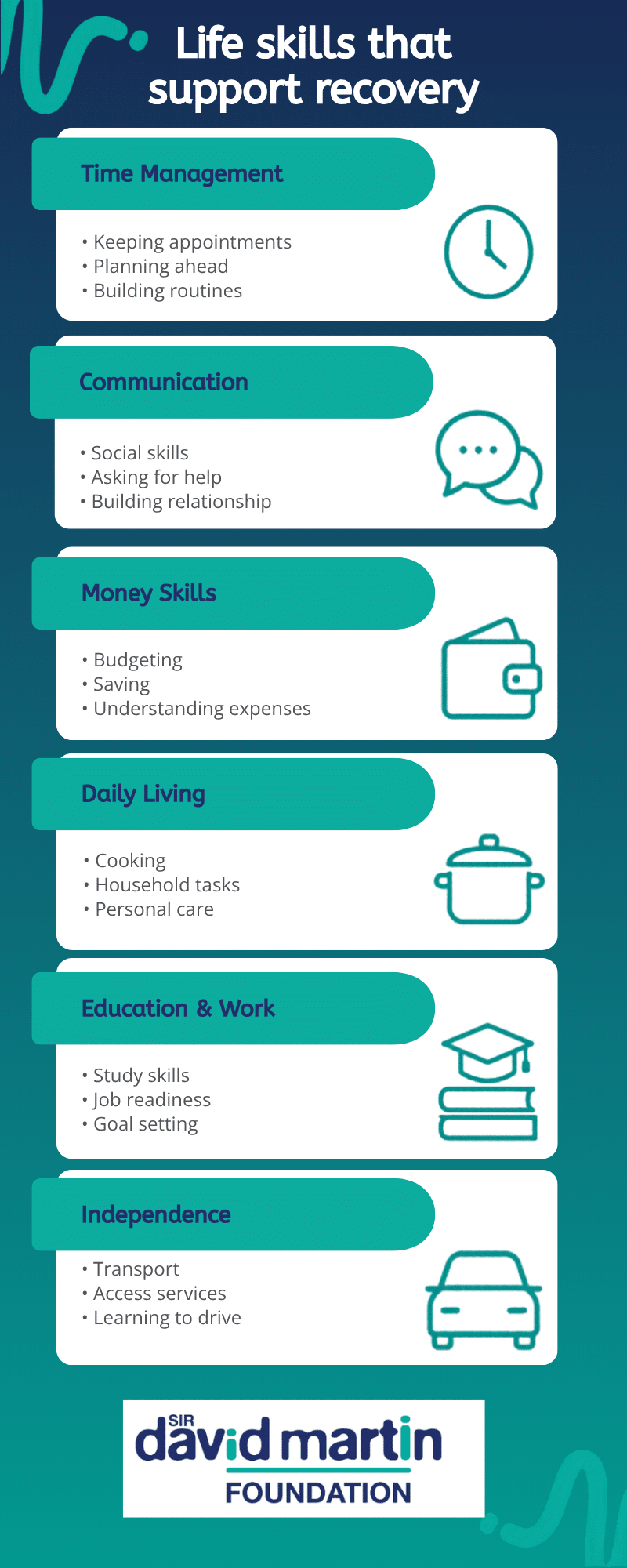
UNESCO describes life skills as a combination of knowledge, behaviours, attitudes and values that help people navigate challenges, communicate effectively, solve problems and work towards their goals.
These can include:
- Cooking and meal preparation
- Budgeting and managing money
- Time management and organisation
- Communication and relationship skills
- Personal hygiene and self-care
- Household responsibilities
- Using public transport
- Applying for jobs and attending interviews
- Making appointments and managing personal responsibilities
Life skills can support greater independence and help young people participate more confidently in education, employment and community life.
Building Confidence Through Everyday Skills
Learning life skills is not simply about completing tasks. It is also about developing confidence.
When a young person learns how to budget, prepare meals, attend appointments independently or manage their own schedule, they begin to develop a stronger sense of capability and self-belief.
Small achievements often create momentum. Successfully completing everyday responsibilities can help young people feel more prepared to take on larger challenges, whether that involves returning to study, seeking employment or rebuilding relationships.
Confidence built through practical experience can become an important foundation for long-term recovery.
Life Skills and Recovery Often Go Hand in Hand
Recovery often involves creating new routines and habits that support wellbeing.
Without structure, young people may find it difficult to maintain positive changes over time. Practical skills help create that structure by providing a framework for daily life.
Managing finances, preparing healthy meals, attending appointments, maintaining living spaces and organising daily responsibilities all contribute to a greater sense of stability.
Many youth-focused recovery programs recognise that developing these practical skills can be an important part of supporting long-term outcomes.
Opportunities to build confidence, resilience and independence can help young people move forward with greater self-belief and purpose.
Preparing for Greater Independence
The transition into adulthood can be challenging for any young person.
For those who have experienced significant challenges, additional support may be needed to develop the skills required for independent living.
According to the NSW Department of Communities and Justice, life skills such as budgeting, cooking, household management, communication, time management and accessing services are important building blocks for independence. The department notes that some young people may require additional guidance and opportunities to develop these skills gradually over time.
Developing practical life skills can help young people feel more prepared for adult responsibilities while also improving their ability to engage with education, employment and community life.
Life Skills Can Help Young People Work Towards Their Goals
Recovery often involves looking beyond immediate challenges and thinking about the future.
Whether a young person hopes to return to education, find employment, secure stable housing or improve their wellbeing, practical life skills can help them take positive steps forward.
According to headspace, setting goals can help young people stay motivated, build confidence and focus on what matters most to them. Breaking larger goals into smaller, manageable actions can make progress feel more achievable while creating opportunities to learn and celebrate success along the way.
Skills such as time management, communication, problem solving and organisation are not only useful in everyday life, they can also support young people as they work towards personal, educational and career goals.
By developing these capabilities over time, young people can gain greater confidence in their ability to make decisions, overcome setbacks and continue moving forward.
Learning Happens Through Experience
Life skills are rarely learned through theory alone.
Young people often develop these abilities through practice, repetition and real-world experiences. Cooking meals, managing responsibilities, participating in education or volunteering, learning to drive and engaging with community activities can all contribute to personal growth and skill development.
Programs such as Mission Australia’s Triple Care Farm recognise the importance of practical learning. Alongside counselling and therapeutic support, young people have opportunities to develop everyday living skills, participate in education and vocational training, and build the confidence needed to navigate life beyond treatment.
Supportive environments that encourage young people to try new things, learn from mistakes and celebrate achievements can make a meaningful difference.
Even small successes can help reinforce positive habits and increase confidence over time.
Supporting Long-term Outcomes
Long-term recovery is not defined by a single milestone. It is often built through a series of positive steps that create greater stability, confidence and independence.
Life skills help young people navigate everyday challenges, build healthy routines and develop the confidence needed to pursue their goals.
While every recovery journey is different, practical skills can provide an important foundation for future education, employment, relationships and independent living.
By supporting young people to develop these abilities, we help create opportunities for long-term growth, resilience and positive change.
Why Family Involvement Can Make A Difference In Youth Recovery
Recovery is often viewed as an individual journey. While personal commitment and professional support are important, family involvement can also be an important source of encouragement, stability and connection for many young people.
For young people experiencing challenges with alcohol, other drugs, mental health, or life circumstances, recovery rarely happens in isolation. The people around them can influence how they engage with support, navigate setbacks and build confidence in the future.
With programs such as Mission Australia’s Triple Care Farm, funded by Sir David Martin Foundation, recovery is supported through a holistic approach that recognises the importance of relationships, connection and community.
Recovery is about more than addressing substance use
Youth recovery involves much more than reducing or stopping alcohol and other drug use. It often includes rebuilding confidence, developing life skills, improving wellbeing, strengthening relationships and creating a sense of purpose.
Many young people entering treatment have experienced a range of challenges, including trauma, family conflict, disrupted education, housing instability or mental health concerns. Recovery involves addressing these interconnected factors and building a foundation for long-term wellbeing.
Research has found that supportive family relationships can contribute to better engagement with treatment and recovery services, helping young people stay connected to the support they need.
How family involvement can support recovery
Family involvement can take many forms depending on a young person’s circumstances and needs.
For some young people, support may come from parents or guardians. For others, it may come from grandparents, siblings, extended family members, carers or other trusted adults. What matters most is having positive and supportive relationships that encourage recovery.
Family involvement can help by:
- encouraging participation in treatment and support services
- providing practical assistance with daily responsibilities
- creating stability and routine
- offering emotional encouragement during difficult periods
- helping young people feel connected and understood
- reinforcing positive changes after treatment.
Research examining youth substance use treatment has highlighted that families can be powerful resources for improving treatment engagement, supporting active participation and strengthening long-term recovery outcomes when appropriately involved in care.
Building understanding and communication
When a young person is experiencing challenges, family members often have questions of their own. They may feel uncertain about how best to help or struggle to understand what their loved one is going through.
Family-inclusive approaches recognise that providing information and support to family members can improve outcomes for everyone involved. Better understanding can help reduce misunderstandings, improve communication and create a more supportive environment for recovery.
The Australian Institute of Family Studies notes that family-inclusive approaches can improve engagement with services, increase wellbeing and support ongoing recovery by helping families work collaboratively with young people and support providers.
Open and respectful communication is often one of the most valuable ways families can offer support. Listening without judgement, showing empathy and maintaining connection can help young people feel safe enough to seek help and remain engaged with recovery.
Every family situation is different
Family involvement is not appropriate in every situation, and recovery support should always consider the individual circumstances of the young person.
Some young people have strong family relationships that can be actively included in their recovery journey. Others may have experienced family conflict, trauma or other challenges that make direct involvement more complex.
Family-inclusive approaches recognise that “family” can be defined broadly and may include any trusted person who plays a positive role in a young person’s life. The focus is on identifying supportive relationships that contribute to wellbeing and recovery.
Importantly, young people should be involved in decisions about how family members or support networks participate in their care.
Supporting families matters too
Recovery can be challenging for young people and the people who care about them.
Families often experience stress, uncertainty and concern while supporting a loved one through recovery. Access to information, education and support can help family members better understand the recovery process and look after their own wellbeing.
Research has highlighted the importance of viewing families not simply as observers of recovery, but as active participants who may also need support, guidance and resources throughout the process.
When families feel informed and supported, they are often better equipped to provide encouragement and stability for the young person in their care.
Recovery continues beyond treatment
Recovery does not end when a treatment program finishes. Maintaining positive changes often requires ongoing support, healthy routines and meaningful connections.
Family members and trusted support networks can play an important role during this stage by encouraging healthy habits, celebrating progress and helping young people stay focused on their goals.
Even small actions, such as regular check-ins, spending time together or offering practical support, can help reinforce a sense of connection and belonging.
Looking ahead
No single factor determines a young person’s recovery journey. Professional treatment, personal motivation, community support and individual circumstances all play important roles.
However, evidence continues to show that supportive relationships can make a meaningful difference. When appropriate, involving family members and trusted support networks can strengthen engagement, encourage recovery and help young people build a more positive future.
By recognising the value of connection, recovery becomes something that young people do not have to face alone.
The Role of Routine and Structure In Supporting Long-term Recovery
Recovery is not just about stopping substance use. It is about rebuilding daily life in a way that feels stable, manageable and meaningful.
Routine plays a key role in that process. When each day has some level of structure, it becomes easier to manage emotions, stay engaged with support and move forward with more confidence. Even something as simple as knowing what comes next can reduce uncertainty and create a sense of control.
For young people participating in structured programs such as Triple Care Farm Rehabilitation Program, routine is built into daily life through a combination of counselling, education, skill-building and shared activities. This consistency helps create a foundation where recovery can begin to take shape.
Why routine matters in recovery
Early recovery can feel unpredictable. Without structure, long periods of unplanned time can lead to restlessness, anxiety or feeling overwhelmed.
A steady rhythm to the day helps reduce that pressure. It provides stability and makes it easier to respond to challenges calmly, while also creating space for new habits to develop over time.
Small actions such as getting up at the same time, attending appointments or preparing meals can build a sense of progress. These everyday wins help rebuild confidence and reinforce the belief that change is possible.
Routine also supports overall wellbeing. When sleep, nutrition and movement become more consistent, energy levels improve and mood becomes easier to manage. These factors all contribute to staying engaged in recovery and maintaining momentum.
Building a routine that works in real life
A helpful routine does not need to be complicated. In many cases, starting small is the most effective approach.
Simple habits like setting a regular wake-up time, preparing meals and incorporating light movement can create a steady rhythm without feeling overwhelming. Adding structure to the day might also include planning time for appointments, setting reminders or scheduling moments to rest and reset.
Over time, these habits can build naturally, helping to strengthen confidence and create a greater sense of stability. Even small actions, like making the bed, going for a short walk or checking in with someone, can create a sense of progress and direction.
Flexibility is just as important as consistency. Life does not always go to plan, and routines that are too rigid can be difficult to maintain. A routine should act as a guide, not a source of pressure, allowing space to adjust when needed.
It can also help to include a balance of activities throughout the day. This might involve time for personal responsibilities, moments of connection with others, and activities that support wellbeing such as exercise, reflection or relaxation. Finding a rhythm that feels realistic and sustainable is what allows it to support long-term recovery.
Routine, connection and ongoing support
Recovery is not something people navigate alone. Ongoing support plays an important role in maintaining progress, especially during the transition back into everyday life.
Programs such as Aftercare offered through the Youth Network provide continued support after residential treatment, helping young people stay connected, access opportunities and navigate challenges in the community. Regular check-ins and guidance during this phase can make routines easier to maintain and adapt over time.
Connection also strengthens consistency. Time spent with supportive people, whether through family, community or structured programs, helps reinforce positive habits. These relationships provide encouragement, accountability and a sense of belonging.
Creating pathways that support long-term recovery
Long-term recovery is shaped by what happens each day. Routine provides a framework where people can rebuild their lives step by step, without feeling overwhelmed by the bigger picture.
It doesn’t have to be perfect. What matters is showing up, making small changes and keeping things moving.
For those seeking support, having access to clear and reliable pathways can make a significant difference. Whether someone needs immediate assistance, ongoing support or treatment options, Sir David Martin Foundation’s Find Help and resources page brings together services that can help people connect with the right support.
Taking the next step
Getting through a tough day is easier when there is a sense of structure and support in place. Recovery is an ongoing process of rebuilding, adjusting and moving forward.
Routine helps create stability during that process. Combined with the right support, it can help people feel more in control, more connected and more capable of creating lasting change.
The Early Drug Diversion Initiative: What the Evaluation Shows and How It Can Work Better
A Quick Overview of EDDI
The Early Drug Diversion Initiative (EDDI) was introduced in New South Wales in February 2024 with a clear purpose: to reduce harm, limit stigma, and connect people with health-based support instead of pushing them through the court system.
Under the scheme, eligible adults found with small quantities of certain drugs can be issued a diversion notice rather than being charged. This gives them a choice to complete a short health-focused intervention or pay a fine, avoiding a court appearance altogether.
At its core, EDDI reflects a shift towards recognising that support and early intervention can lead to better outcomes for individuals and the broader community.
What the recent evaluation found
A 2026 evaluation by the NSW Bureau of Crime Statistics and Research provides the first detailed look at how EDDI has operated in practice.
The findings highlight a gap between intention and reality:
- Around 90% of cases still proceeded to court rather than diversion
- Only about 28% of people were eligible for the scheme
- Of those eligible, just 22% actually received a diversion
In simple terms, even when people qualify for EDDI, most are not being diverted.
You can explore the full findings in the official evaluation report , which breaks down how eligibility criteria and decision-making processes are influencing outcomes across the state.
Where the initiative is falling short
The evaluation reinforces concerns already raised by organisations working in the alcohol and other drugs sector.
Several key issues stand out:
- Restrictive eligibility criteria
A large proportion of people are excluded due to conditions such as concurrent offences or previous charges. This limits access to those who could benefit from early support. - Inconsistent application
Because the scheme relies on police discretion, diversion is not applied uniformly. This can lead to different outcomes for people in similar situations. - Unequal access
Evidence suggests that people experiencing disadvantage, including First Nations communities and those with prior contact with the justice system, are less likely to receive diversion. - Limited awareness
Both community understanding and frontline awareness of the scheme appear to be low, which further reduces its reach.
Insights from the Drug Policy Modelling Program at University of New South Wales further support these findings, showing low uptake of diversion and differences in how the scheme is applied across demographics and drug types.
Why improving EDDI matters
When early support is accessible, it can help people address challenges before they escalate.
Stigma and fear of consequences can discourage people from seeking help. Guidance developed in partnership with organisations such as the Alcohol and Drug Foundation and the New Zealand Drug Foundation highlights how language, perception and policy settings can directly impact whether people feel safe to access support.
EDDI was designed to reduce these barriers by offering a pathway focused on support rather than penalties. Strengthening the scheme means more people can access that pathway earlier, when it can have the greatest impact.
For additional context on how stigma influences outcomes and how to shift the narrative, the broader messaging framework developed by Common Cause Australia provides practical guidance for more effective communication and advocacy.
What a more effective EDDI could look like
The evaluation points to clear opportunities to improve how the scheme operates.
A more effective approach would focus on:
Making diversion the standard response
Ensuring that eligible people are consistently offered diversion, rather than it being applied unevenly.
Expanding eligibility
Allowing more people to access the scheme, including those with multiple substances or prior interactions.
Improving transparency
Providing clear data on diversion rates across regions to support accountability and consistency.
Offering flexible support options
Ensuring interventions are accessible and suited to different circumstances, making it easier for people to engage.
Reducing barriers within the scheme
Changes such as lowering fines and reviewing the strike system could help make participation more achievable.
These recommendations align with broader sector calls for reform following the NSW Drug Summit and ongoing advocacy efforts across the state.
Creating better pathways to support
EDDI represents an important step towards a more supportive and effective approach. The recent evaluation shows that while the framework is in place, there is more work to do to ensure it delivers consistent outcomes.
Improving the scheme is not just about policy design. It is about creating pathways where people feel able to engage with support, access services early, and move forward without unnecessary barriers.
With the right adjustments, EDDI has the potential to better connect people with the support they need and strengthen outcomes across the community.
Vaping and Young People: Understanding The Risks, The Rules and Where to Get Help
Vaping has become increasingly common among young people in Australia, raising concerns about addiction, health risks and long-term wellbeing. In response, national regulations introduced in 2024 significantly changed how vaping products are accessed and regulated to better protect young people.
Understanding what these rules mean is important for families, carers and young people themselves. While they aim to limit availability, they also highlight the need for early support, education and access to the right help.
Why vaping among young people is a concern
Vapes, also known as e-cigarettes, are battery-operated devices that heat liquid chemicals into an aerosol that is inhaled. This aerosol is often referred to as vapour, but it can contain a wide range of harmful substances.
Research suggests that vaping can expose users to toxic chemicals and nicotine, which can harm brain development in young people and impact attention, memory and mood. Many products also contain substances such as formaldehyde, heavy metals and other harmful compounds that may affect lung health and overall wellbeing.
Nicotine is highly addictive, and dependence can develop quickly. Research suggests that young people who vape may experience withdrawal symptoms such as irritability, anxiety and difficulty concentrating, which can make it harder to manage stress and everyday challenges.
For some young people, vaping is also influenced by social environments, peer pressure or as a way to cope with underlying emotional or mental health concerns.
Understanding Australia’s vaping rules
Australia has introduced strict national regulations to limit access to vapes and reduce harm.
Recent reforms have significantly changed how vaping products are regulated, including banning disposable vapes and restricting sales to pharmacies only. These changes aim to reposition vaping as a controlled tool for smoking cessation rather than a widely available consumer product.
Under the current rules:
- Vapes can only be sold through pharmacies
- Disposable and non-therapeutic vapes are banned
- Adults may access certain products depending on state laws
- People under 18 require a prescription
- Flavours are limited and packaging is strictly regulated
These measures are designed to reduce access among young people while ensuring appropriate medical oversight where needed.
What this means for families and carers
These rules provide an opportunity for more open and informed conversations about vaping.
Approaching the topic calmly and without judgment can help young people feel supported and understood. This might include:
- Asking questions and listening without immediate criticism
- Sharing clear, factual information about the risks of vaping
- Discussing peer influence and decision-making
- Keeping communication ongoing rather than relying on a single conversation
Young people are more likely to make positive health choices when they feel supported and have access to accurate information, rather than feeling judged or dismissed.
It is also important to recognise that vaping may be linked to broader challenges. Young people experiencing stress, anxiety or disconnection may be more likely to engage in risk-taking behaviours.
Where young people can get help
For young people who are already vaping, support is available. Nicotine dependence can develop quickly, but with the right guidance, quitting is possible.
Support options include:
- Speaking with a GP or health professional
- Accessing counselling or youth support services
- Using structured quit programs and tools
- Reaching out to trusted adults or mentors
Evidence shows that combining behavioural support with practical tools, such as counselling and quit strategies, can improve the likelihood of successfully quitting vaping.
Structured support environments can also play an important role. Programs that focus on routine, connection and therapeutic care can help young people address both substance use and the factors contributing to it.
Sir David Martin Foundation is a major funder of Mission Australia’s Triple Care Farm, where connection and compassion are built into every stage of recovery. Through programs like this, young people can step away from harmful patterns, rebuild confidence and develop healthier coping strategies.
Additional information and support options can be found on our resources page, helping young people and families access guidance when it is needed.
Prevention starts with connection and awareness
Stronger regulations are an important step, but prevention goes beyond limiting access.
Reducing harm relies on a combination of education, early intervention and accessible support. Young people who feel informed, supported and connected are better equipped to make decisions that protect their health.
Addressing vaping is not only about stopping a behaviour. It is about understanding why it starts, creating space for honest conversations and ensuring help is available early.
By combining regulation with compassionate support, families and communities can help young people move towards healthier and more positive futures.
Sofa Surfing and Hidden Homelessness: Why It Matters More Than We Think
When people think about homelessness, they often picture someone sleeping rough or staying in emergency accommodation. However, for many young people, the experience looks very different.
Sofa surfing, also known as couch surfing, is one of the most common and least visible forms of homelessness. It involves moving from one place to another, staying temporarily with friends, extended family or acquaintances without a stable or secure home.
Because it can appear informal or short term, it is often overlooked. In reality, it can be just as disruptive and harmful as more visible forms of homelessness.
What is sofa surfing?
Sofa surfing or couch surfing refers to living temporarily in other people’s homes without long-term security or a clear place to stay. This might mean sleeping on a couch, sharing overcrowded spaces or moving frequently between households.
Unlike rough sleeping, sofa surfing can be hidden from view. A young person may still be attending school or maintaining daily routines, making it harder for others to recognise that they are experiencing homelessness.
This form of housing instability often sits between crisis and stability, where a person has a place to sleep for now but no certainty about what comes next.
Why sofa surfing is a form of homelessness
Sofa surfing is considered a form of hidden homelessness because it lacks the safety, stability and permanence of a secure home.
Data from the Australian Institute of Health and Welfare shows that many people experiencing homelessness are not sleeping on the streets, but are instead staying temporarily with others. This highlights how much of homelessness exists outside of what is immediately visible.
Academic research also reinforces this. Couch surfing is widely recognised as a form of hidden homelessness that is often underrepresented in official data, despite making up a significant portion of those without stable housing
This means that the true scale of homelessness is likely much larger than what is captured through traditional measures.
Why young people end up sofa surfing
There is rarely a single reason why a young person begins sofa surfing. It is usually the result of multiple pressures building over time.
Common contributing factors include:
- Family conflict or breakdown
- Financial stress within the household
- Mental health challenges
- Experiences of neglect, abuse or unsafe environments
- Difficulty accessing stable or affordable housing
Local studies have shown how early this can begin. A survey of students on Sydney’s Northern Beaches identified young people already at risk of homelessness, along with many more needing support for issues such as mental health and family conflict.
Importantly, many young people in these situations do not identify themselves as homeless. Moving between friends’ homes can feel temporary or even normalised, which can delay access to support and youth mental health support services.
The hidden risks of sofa surfing
While sofa surfing may appear safer than sleeping rough, it comes with its own set of challenges.
Unstable housing can affect every part of a young person’s life, including their ability to study, work and maintain relationships. Constant movement can lead to:
- Disrupted education and school attendance
- Increased stress and anxiety
- Lack of privacy and personal space
- Greater exposure to unsafe or unpredictable environments
Over time, this instability can have a lasting impact on wellbeing and increase the need for ongoing youth mental health support.
Experiences like couch surfing are linked to reduced psychological wellbeing, often due to the loss of control and stability in daily life
Why hidden homelessness is easy to miss
One of the biggest challenges with sofa surfing is that it often goes unnoticed.
Young people may still appear to be functioning day to day. They might attend school, spend time with friends and avoid drawing attention to their situation. Without obvious signs, teachers, peers and even extended family may not realise what is happening.
Hidden homelessness can also fall outside traditional support systems. If someone is not accessing services or identifying as homeless, they may not receive the help and support they need.
This creates a gap where vulnerable young people can slip through unnoticed.
Why early support matters
Recognising sofa surfing as homelessness is an important step toward providing the right support at the right time.
Early intervention can help prevent situations from escalating into long-term homelessness. When young people feel supported, understood and connected, they are more likely to access services and make decisions that improve their stability.
Support can take many forms, including:
- Safe and stable accommodation options
- Access to education and youth mental health support
- Family support and mediation services
- Community programs that build connection and resilience
Addressing hidden homelessness requires a broader understanding of what homelessness looks like and a commitment to responding before crisis point.
Recognising the reality behind the label
Sofa surfing is often dismissed as temporary or informal, but for many young people, it reflects a deeper lack of stability and security.
Understanding it as a form of homelessness helps shift the focus from short-term solutions to long-term support. It also highlights the importance of noticing the less visible experiences that can have a significant impact on a young person’s life.
By recognising sofa surfing for what it is, families, communities and support services can work together to create more stable pathways forward, supported by accessible support and early intervention services.
Where to find support and pathways to stability
Support is available for young people experiencing housing instability, including those who are sofa surfing. Services delivered by Mission Australia provide pathways to safe, stable housing alongside practical and emotional support, helping people find and maintain a secure place to live. For those needing additional support around wellbeing, mental health or substance use, Sir David Martin Foundation’s resources page offers guidance and connections to services that can support recovery and long-term stability.
The Hidden Mental Load On Siblings When A Young Person Is Struggling
When a young person is facing challenges such as mental health concerns, substance use or instability, the impact is rarely isolated to just one individual. Families often focus their attention on the child in immediate need, but there is another group quietly affected in the background: siblings.
The experience of having a brother or sister who is struggling can create a significant emotional and psychological burden. Often described as the mental load on siblings, this pressure can shape family relationships, wellbeing and long-term outcomes in ways that are not always visible. Family psychology insights highlight that when one child struggles, the effects tend to ripple across the entire family, influencing how each member experiences support, attention and connection.
What is the mental load on siblings?
The mental load on siblings refers to the emotional pressure, responsibility and internal stress experienced by brothers and sisters when someone in the family is going through a difficult period.
This can include worry about their sibling’s safety or future, feeling responsible for helping or holding things together, suppressing their own needs to avoid adding pressure, and managing complex emotions such as guilt, frustration or confusion.
Research shows that sibling relationships play a critical role in emotional and behavioural development across the lifespan. They influence mental health, coping strategies and social outcomes, meaning that when one sibling is struggling, the impact on others can be significant and long-lasting. This highlights why these dynamics should not be overlooked when considering family wellbeing.
The ripple effect across the family
When one child requires ongoing support, family dynamics naturally adjust. Time, energy and emotional resources are often directed where they are most urgently needed.
While this response is understandable, it can unintentionally create imbalance. Insights from family psychology research suggest that when one child’s needs dominate family attention, siblings may begin to feel overlooked, overburdened or uncertain about their place within the family structure. Over time, this imbalance can affect both individual wellbeing and long-term sibling relationships.
Different ways siblings experience this load
Not all siblings experience this situation in the same way. Their responses often depend on personality, family roles and expectations.
Some siblings begin to feel invisible. When attention is consistently directed elsewhere, they may stop sharing their own challenges altogether, believing their needs are less important.
Others take on the role of the reliable one. While they may appear independent and capable, this can come with an unspoken expectation that they do not need support.
In some families, siblings take on responsibilities that go beyond their role. This can include mediating conflicts, providing emotional support or helping manage crises. Over time, this type of pressure can contribute to anxiety and burnout, particularly when young people feel responsible for situations they cannot control.
The emotional impact on siblings
The mental load carried by siblings can have lasting effects. Young people in these situations may experience anxiety, ongoing stress, feelings of guilt for being “okay”, and frustration that is difficult to express.
Evidence also indicates that siblings of individuals experiencing mental health challenges are more likely to experience mental health difficulties themselves, reinforcing the importance of recognising sibling dynamics early.
In many cases, these young people do not actively seek help. They may minimise their own experiences or feel that their struggles are not significant enough to warrant attention, particularly when compared to what their sibling is going through.
Why siblings are often overlooked
Siblings are often seen as coping well, especially when compared to a brother or sister facing more visible challenges.
Families may unintentionally prioritise immediate or urgent needs, assume resilience means no support is required, or avoid additional conversations in an effort to reduce stress within the household.
However, family and sibling dynamics are often under-recognised in support systems, despite their strong influence on long-term wellbeing. Recognising this gap is an important step toward creating more balanced and supportive family environments.
Supporting siblings in a meaningful way
Supporting one child should not come at the expense of another. Small, intentional actions can make a meaningful difference.
This includes regularly checking in with all children, acknowledging each child’s experience and perspective, setting clear boundaries so siblings are not placed in caregiving roles, and encouraging open and honest conversations without judgment.
Allowing siblings to decide how involved they want to be can also help reduce pressure and prevent resentment from building over time. Creating space for siblings to be heard reinforces that their wellbeing matters equally.
Supporting the whole family through connection and care
Sir David Martin Foundation is committed to supporting young people experiencing challenges related to substance use, mental health and disconnection.
Sir David Martin Foundation is a major funder of Mission Australia’s Triple Care Farm, where connection and compassion are built into every stage of recovery.
Programs like Triple Care Farm provide structured support that helps young people rebuild routines, develop life skills and regain a sense of stability. This approach not only supports individual recovery but also helps ease pressure on families, allowing healthier dynamics to develop over time.
When young people are supported in a consistent and compassionate environment, it creates space for families to reconnect and rebalance.
Recognising the siblings behind the story
When a young person is struggling, it is natural for attention to focus on immediate needs. However, recognising the experiences of siblings is essential to supporting long-term wellbeing within the family.
The mental load on siblings is real, even when it is not immediately visible. By acknowledging their role, listening to their experiences and creating space for support, families can strengthen relationships and build a more balanced path forward. Access to the right support can make a meaningful difference, and families can explore available guidance and services through our resources page to better understand how to support every young person within the family.JTNDc3R5bGUlM0UlMEEub3ZhbCUyMCU3QiUwQWRpc3BsYXklM0Fub25lJTIxaW1wb3J0YW50JTNCJTBBJTdEJTBBJTNDJTJGc3R5bGUlM0U=
Youth Homelessness Matters: Why Awareness and Action Are Needed Now
Youth homelessness in Australia is often hidden, complex and deeply misunderstood. For many young people, it does not always look like sleeping rough. It can mean couch surfing, staying in unsafe environments, or moving between temporary places without stability or support.
Youth Homelessness Matters Day (YHMD), held on 15 April, is a national day dedicated to raising awareness of this issue and encouraging communities to take action. It is a reminder that behind the statistics are real young people navigating uncertainty, vulnerability and disrupted futures.
Understanding the Reality of Youth Homelessness
Recent data highlights the scale of the issue. Across Australia in 2024–25, 42,763 children and young people under 25 presented alone to specialist homelessness services.
This figure represents more than just numbers. It reflects young people facing significant challenges at critical stages of development. Many are trying to continue education, maintain employment or simply find a safe place to sleep.
Youth homelessness is often driven by a combination of factors rather than a single cause. The most common reasons young people seek support include:
- Domestic and family violence
- Housing instability or crisis
- Relationship or family breakdown
These experiences can disrupt a young person’s sense of safety, belonging and identity, making early support essential.
A Hidden Issue With Serious Consequences
Unlike adult homelessness, youth homelessness is frequently less visible. Many young people rely on informal arrangements such as staying with friends or extended family. While this may seem like a short-term solution, it often comes with risks.
Couch surfing, for example, can leave young people vulnerable to exploitation, unsafe environments and ongoing instability. Without a consistent place to call home, it becomes difficult to focus on education, maintain employment or access healthcare and support services.
There are also groups disproportionately affected. Young Aboriginal and Torres Strait Islander people are overrepresented among those accessing homelessness services, highlighting the need for culturally appropriate and community-led support.
The Challenge of Limited Resources
One of the most confronting realities is that many young people seeking help are unable to access it.
On any given night, youth homelessness services are forced to turn away people due to limited capacity and funding. In fact, around half of young people attempting to access a crisis bed are turned away.
This gap between demand and available support places additional pressure on both young people and frontline workers. For young people, it can mean returning to unsafe environments or continuing to move between unstable living situations. For services, it creates ongoing challenges in meeting urgent needs with limited resources.
Why Youth Homelessness Matters Day is important
Youth Homelessness Matters Day exists to bring this issue into focus and encourage meaningful action.
The campaign centres around three key actions:
- Educate by sharing accurate information and raising awareness
- Activate by participating in or hosting community events
- Donate to support services working directly with young people
These actions recognise that addressing youth homelessness requires collective effort. Awareness alone is not enough. It must be supported by engagement, advocacy and tangible support for services on the ground.
Visit yhmd.org.au for more information.
The Role of Community Awareness
One of the most powerful aspects of YHMD is its focus on community voice. Personal conversations, shared experiences and local engagement can be more impactful than traditional campaigns.
Raising awareness helps challenge common misconceptions. It shifts the narrative from blame to understanding and highlights the structural and social factors that contribute to youth homelessness.
It also encourages earlier intervention. When communities understand the signs and realities of youth homelessness, they are better positioned to support young people before situations escalate.
Supporting Young People Through Connection and Care
Youth homelessness is often closely linked with challenges such as substance use and mental health concerns. For many young people, these experiences are interconnected. Unstable living environments can contribute to increased stress, trauma and risk behaviours, while substance use or mental health challenges can also make it harder to maintain stable housing.
This is where the right support can make a meaningful difference.
Sir David Martin Foundation focuses on supporting young people facing these overlapping challenges by connecting them with services that address both immediate needs and longer-term recovery.
Sir David Martin Foundation is a major funder of Mission Australia’s Triple Care Farm, where connection and compassion are built into every stage of recovery. The program provides a structured and supportive environment where young people can step away from crisis, rebuild daily routines and develop skills that support long-term wellbeing.
Recovery is not only about finding stable housing. It is about addressing the underlying factors that contribute to homelessness, strengthening resilience and helping young people move forward with greater confidence and stability.
How You Can Take Action
Ending youth homelessness is a shared responsibility. While the issue is complex, there are practical ways individuals and communities can contribute:
- Share information and start conversations about youth homelessness
- Support local services through donations or volunteering
- Attend or host events that raise awareness and encourage discussion
- Advocate for increased funding and resources for youth services
Even small actions can help build momentum and contribute to broader change.
Moving Towards A Future Where Every Young Person Has A Safe Place to Call Home
Every young person deserves a safe, stable environment where they can grow, learn and thrive. Youth homelessness disrupts this foundation, but with the right support, it is possible to create pathways forward.
Youth Homelessness Matters Day is not only about recognising the issue. It is about acknowledging the potential of every young person and the importance of providing the support they need to reach it.
By continuing to raise awareness, strengthen services and support early intervention, communities can work together towards a future where no young person is left without a place to call home.