
Teen recovery stories can show what change looks like beyond treatment alone. For a young person, recovery may involve rebuilding relationships, returning to education, finding work or simply becoming more confident about what comes next.
The experiences shared through Martin Youth Foundation show young people making their own choices and working towards goals that matter to them. They also show why appropriate care, trusted relationships and opportunities can matter throughout recovery.
What Can Young People Teach Us About Recovery?
Young people’s recovery journeys can take many different paths. For some, change may begin with asking for help, while others may first reconnect with family, education, work or their community. Real recovery stories show the importance of support, resilience and opportunity, while reminding us that every young person’s experience is different.
The Foundation’s young people’s stories put those experiences at the centre. They show young people taking steps towards the future they want, rather than defining them by alcohol and drug use.
Saige, Jake and Sasha each had different circumstances and goals. Looking at their experiences together gives us a broader picture of what recovery can involve.
Every Recovery Story is Different
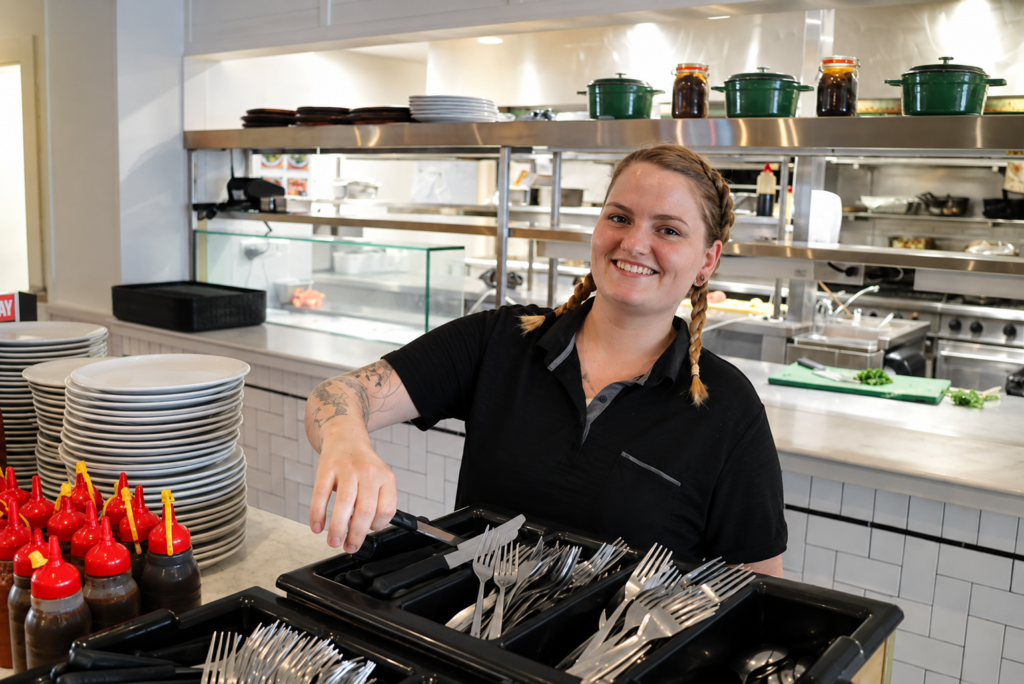
Saige’s path began much earlier than most people would expect. She started drinking as a young teenager, and within a few years was using ice daily, disconnected from school, without work and sleeping in a tent on the beach.
A frightening brush with police, after a drug deal went wrong, became the wake-up call that led her to start researching treatment options herself. Not long after, she found her way to Triple Care Farm.
At the Farm, Saige found non-judgmental support and a sense of community among other young people who understood what she was going through. She was paired with Linda, an aftercare worker, who helped her keep moving forward once she returned to the community. Finding a job came easily; the harder work, she says, was learning to trust herself and the world again.
Triple Care Farm is owned and operated by Mission Australia, with Martin Youth Foundation as its major philanthropic funder.

Sasha’s experience followed a different path. Her substance use had interrupted her animal care studies at TAFE. During residential rehabilitation at Triple Care Farm, her studies were deferred so she could return to them afterwards. With help from her Youth Network aftercare worker, she restarted her course and later secured a role at a wildlife and conservation zoo.
Recovery can therefore involve changes across several areas of a young person’s life:
|
One young person may… |
Another may… |
| Reconnect with family | Build new supportive relationships |
| Return to education | Move towards employment |
| Develop practical skills | Reconnect with personal interests |
| Access professional care | Take part in community activities |
| Establish healthier routines | Work towards personal goals |
What matters to one young person may not be the priority for another.
Asking for Help Can Be An Important StepReaching out can be difficult, particularly when a young person is worried about judgement or unsure what treatment will involve.
 Jake’s story gives us an example. He first tried marijuana at 14 and was using daily within a year. Over the next several years, his substance use grew more serious, and he tried rehabilitation more than once before he was ready to commit to the work involved fully. When he eventually reached Triple Care Farm’s Walawaani program, he says it “felt like home.”
His experience also shows why resilience should not be confused with managing everything alone or getting it right the first time. Recognising that help is needed, even after earlier attempts haven’t worked, can require real strength.
Trusted relationships can make that process easier. Depending on the young person, this might involve family, friends, youth workers, teachers, health professionals or specialist alcohol and drug services.
Recovery Can Involve Different Kinds of Support
Treatment may be one part of recovery, but young people’s goals often extend into other areas of their lives.
Sasha’s story shows this clearly. After residential treatment, her Youth Network aftercare worker helped her continue her studies and prepare for her move to Tasmania. The practical help described in her story included looking for housing, completing a driving program and connecting with local services and social groups.
This type of ongoing care is part of Youth Network aftercare, a program delivered by Mission Australia and funded by Martin Youth Foundation.
Current Youth Network outcomes show that 4 in 5 young people met or partially met their substance use recovery goals.
Source: reported outcomes across all Youth Network aftercare locations, 2022 to 2025.
These outcomes give us one measure of progress. The individual stories show what that progress can mean in everyday life.
Young people’s experiences matter. Explore the Foundation’s stories of change and recovery to hear about different journeys, the help young people received and the possibilities that can emerge through change.
Progress Does Not Always Look the Way We Expect
Some milestones are easy to recognise. Returning to school, completing a course or starting a new job can mark an important point in a young person’s recovery.
Other changes may be less visible. Asking for help, attending an appointment, rebuilding a relationship or developing a healthier routine can still move someone closer to their goals.
Sasha’s experience is a good example of how these areas can connect. Returning to TAFE was one step. Finding employment, preparing to move, working towards her provisional licence and developing connections in a new community were others.
There may also be difficult periods along the way. Recovery can involve progress, challenges and new beginnings. A difficult period does not erase the work a young person has already done.
What Can Young People’s Stories Teach Families and Communities?
For families and communities, these experiences can be a reminder to listen before making assumptions about what a young person needs.
A young person experiencing alcohol or drug dependence still has interests, abilities, relationships and plans for the future. Saige wanted to make her mum proud. Jake wanted to rebuild his relationship with his family and build a stable, everyday life. Sasha wanted to continue her animal care studies and pursue a career she cared about.
Listening without judgement can give young people more room to talk about what they need. Families can also help them explore appropriate professional care while respecting their involvement in decisions about their future.
Young people’s voices are especially valuable here. Their experiences can show us what mattered to them rather than what other people assumed should matter.
Why Sharing Recovery Stories Matters
Sharing these experiences responsibly can challenge stereotypes about young people experiencing substance use or dependence.
For another young person, a recovery story may make it feel more possible to ask for help. Families may gain a better understanding of how change can unfold. Supporters can also see how treatment, aftercare and practical opportunities connect with education, employment, relationships and community life.
The way these stories are told matters. Difficult experiences should not be used simply to create an emotional reaction. A young person’s privacy, dignity, choices and future should remain central.
That means looking beyond the hardest part of someone’s story. Saige’s renewed sense of trust and community, Jake’s reconnection with his family and Sasha’s career goals are all reminders that recovery is also about where a young person wants to go next.
Frequently Asked Questions
What can we learn from teen recovery stories?
They can help us understand recovery from young people’s perspectives. Their experiences show how personal goals, appropriate care, relationships and practical opportunities can become part of recovery.
What can recovery look like for a young person?
It may include changes in alcohol and drug use alongside other areas of life. Education, employment, relationships, housing, health, new skills and personal goals may all be important.
Is recovery the same for every young person?
No. Young people have different circumstances, strengths and goals. Their recovery journeys can reflect what matters to them and the type of care they need.
How can families support a young person?
Listening without judgement can be a useful starting point. Families can also help young people explore appropriate professional care while keeping their voice involved in decisions about their future.
Why are young people’s stories important?
They give young people an opportunity to describe their experiences from their perspective. Responsible storytelling can also challenge stereotypes while keeping their strengths, choices, and future in view.
Can a young person’s recovery include setbacks?
Yes. Recovery can include positive steps, difficult periods and new beginnings. Challenges along the way do not erase earlier progress or prevent a young person from continuing towards their goals.
Every young person’s circumstances are different, but Saige, Isabel and Sasha’s stories share something important. Each young person took an active role in what came next, with appropriate care and opportunities around them.
Explore more young people’s recovery stories and learn about the programs Martin Youth Foundation funds.
Australia recorded its highest number of drug-induced deaths in 2024, according to Penington Institute’s Australia’s Annual Overdose Report 2026.
The report recorded 2,596 drug-induced deaths across Australia during the year. Of these, 2,091 were unintentional.
Behind these numbers are people, families and communities. The findings also raise an important question: how can young people experiencing alcohol and drug challenges access appropriate support before those challenges become more serious?
For Martin Youth Foundation, this matters because young people can have needs that differ from those of older adults. Treatment and recovery pathways need to recognise the whole person, including their health, relationships, housing, education, employment, and future goals.
What Does Australia’s Latest Overdose Data Tell Us?
Australia’s Annual Overdose Report 2026 highlights the continuing impact of drug-induced deaths across Australia. It shows a long-term increase in unintentional drug-induced deaths and continuing concerns about access to appropriate interventions and care.
Penington Institute reports that more than 47,000 drug-induced deaths have occurred in Australia since 2000. While Australia’s population increased by 41% between 2001 and 2024, the number of unintentional drug-induced deaths increased by 113%.
It is important to distinguish between the terms used in the report. ‘Drug-induced deaths’ includes unintentional deaths as well as deaths determined to be suicide, homicide or of undetermined intent. The report’s analysis focuses particularly on unintentional drug-induced deaths.
The data also shows that drug-related harm is not limited to a single substance. In the five years to 2024, more than two-thirds of unintentional drug-induced deaths involved two or more drug types.
These patterns show why responses need to recognise different circumstances and needs rather than assume there is one typical experience of drug-related harm.
Why Does the Report Matter for Young People?
One of the report’s findings is particularly relevant when thinking about younger Australians.
In 2024, unintentional drug-induced deaths were the third-leading cause of death for both men and women aged 20-29.
That age group does not represent all young people supported through the work of Martin Youth Foundation. The Foundation generally speaks about young people aged 12-24, while individual programs have their own eligibility criteria.
It reinforces why age and life stage need to be considered when thinking about alcohol and drug treatment. A young person may be navigating education, entering employment, developing relationships or trying to establish stable housing at the same time as seeking help.
These parts of life do not sit separately from recovery. The Foundation’s current approach recognises that recovery can include rebuilding confidence, reconnecting with family and community, finding secure housing, participating in education or employment and working towards greater independence.
Overdose is an Australian Issue
The report also challenges the idea that overdose belongs to one particular group of people.
“The lesson is not that overdose is a problem confined to certain communities, but rather the opposite – overdose is an Australian problem.”
John Ryan OAM, CEO, Penington Institute
The report identifies differences across age groups, locations and communities, but its broader message is that drug-related harm reaches across Australian society.
Penington Institute also calls for greater coordination between governments and a response that keeps pace with changing patterns of drug-related harm.
For young people and families, the report also highlights access to help.
Access to Support Can Make a Difference
Penington Institute notes that access to established interventions remains uneven and that barriers continue to prevent some people from accessing potentially life-saving help.
Whether a service exists is only part of the question.
Young people may need to know where to seek help, what types of care are available, and what happens after treatment. Depending on their circumstances, care may also need to consider mental health, family relationships, housing, education or employment.
There is no single pathway that will be right for every young person. What matters is creating opportunities to access appropriate care and take steps towards change.
This is where youth-focused treatment has an important role.
Why Youth-focused Treatment Matters
Young people are not simply younger versions of adult treatment clients.
Their developmental stage and circumstances can influence what constitutes appropriate care. Youth-focused treatment can take account of factors such as:
- family and social relationships
- education and employment
- housing and practical stability
- mental health
- life skills and community connections
- personal goals for the future
This broader view matters because recovery is about more than whether someone is currently using alcohol or drugs. Martin Youth Foundation’s guidance recognises recovery as an ongoing journey and young people as active participants in shaping their own futures.
How Does Triple Care Farm Support Young People?
Triple Care Farm is a youth-specific alcohol and drug residential rehabilitation centre owned and operated by Mission Australia. Martin Youth Foundation is its major philanthropic funder and has partnered with the program for more than 35 years.
Triple Care Farm supports young people aged 16-24 through a continuum that includes residential withdrawal at David Martin Place, residential rehabilitation and structured aftercare.
The approach recognises that addressing alcohol and drug dependence is only one part of a young person’s life. Treatment can also create space to work on practical skills, relationships, routines and plans for what comes next.
Importantly, the young person remains at the centre of that process. The role of treatment and care is to create opportunities, not to take ownership of the person’s recovery.
Recovery Does Not End When Residential Treatment Ends
Moving on from residential treatment can bring another set of challenges.
A young person may be returning to family or community life while also considering housing, employment, education, mental health, and relationships. Continuing care can help them work through these changes and maintain their recovery goals.
Youth Network is one example. It is a six-month structured aftercare program delivered by Mission Australia across four locations in NSW and Western Australia, with funding from Martin Youth Foundation. It supports young people aged 12-25 as they return to community life following residential treatment.
Aftercare recognises that recovery continues beyond residential treatment, while allowing for different pathways and circumstances.
Helping Young People find the Right Support
The findings in Australia’s Annual Overdose Report 2026 are serious, but statistics alone cannot tell us what any individual young person needs.
Martin Youth Foundation is a philanthropic funder of youth-focused alcohol and drug treatment and recovery programs. It does not directly provide treatment. Its role is to fund care and programs that give young people opportunities to work towards recovery and their future. Learn more about the programs funded by Martin Youth Foundation.
Young people, families and carers looking for information can use Martin Youth Foundation’s Find help and Useful resources pages to explore available services and learn more about the programs the Foundation funds.
The report helps show the scale of drug-related harm in Australia. The practical next step is to make appropriate support easier to find while recognising the strengths, goals and potential of young people seeking it.
A young person does not need to be in crisis before their mental health deserves attention. Sometimes support starts with having someone listen. At other times, it may mean professional care, practical help or having somewhere safe to talk.
This Mental Health month, it is worth recognising that youth mental health support can take many forms. Making appropriate help easier to find can give young people more opportunities to be heard and stay connected to the parts of life that matter to them.
Why Youth Mental Health Support Matters
Youth mental health support can help young people access appropriate care, build supportive relationships and stay connected with education, work and their communities. The right support will vary for each young person and may include trusted adults, professional services, community programs or practical support.
Young people aged 12 to 24 may be studying, starting work, developing relationships, becoming more independent or thinking about their future.
These experiences do not automatically cause mental health challenges. They do show why mental health should be considered alongside the other parts of a young person’s life.
What Can Youth Mental Health Support Look Like?

There is no single form of support that suits every young person.
For some, talking to a parent, friend, teacher or another trusted adult may help. Others may choose to speak with a GP, psychologist, counsellor or youth worker. Schools, community organisations and specialist youth services can also play a role.
Not every young person will need professional treatment. What is appropriate depends on their circumstances, preferences and needs.
Listening Can Make A Difference
It can be difficult to know what to say when a young person talks about their mental health. Listening is a useful place to begin.
A trusted person can listen without judgement, take concerns seriously and ask what the young person needs. They can respect their perspective and encourage appropriate professional help where needed.
Speaking up is not always easy. A young person may worry about being judged, misunderstood or treated differently. Concerns about privacy and how others might respond can also affect their willingness to talk.
There can be practical barriers too. Cost, waiting times and the availability of services may affect access to care. Some young people may also be unsure where to go, what services are available or which type of support might be appropriate.
Listening does not mean having all the answers. It means giving a young person space to talk without immediately dismissing their concerns or making decisions for them.
Early Support Can Help
Recognising concerns and connecting with appropriate help early can provide an opportunity to address what a young person is experiencing before difficulties become more complex.
Early support does not guarantee a particular outcome. It may make it easier for a young person to understand their options, access appropriate care and stay connected with people they trust.
Young people should also have a voice in decisions about their wellbeing. What feels accessible or useful to one person may not feel the same to another.
Connection Is Part Of The Bigger Picture
Mental wellbeing does not exist separately from the rest of life.
Young people’s wellbeing can be influenced by their relationships, circumstances, community connections and access to appropriate support. Education, employment, housing and opportunities to participate can also form part of the wider picture.
A young person experiencing mental health challenges may also be a student, employee, friend, sibling, artist, athlete or volunteer. Their strengths, interests and goals still matter.
Martin Youth Foundation funds programs that support young people experiencing complex challenges and create opportunities for positive change.
One example is Youth Network, a structured aftercare program delivered by Mission Australia and funded by the Foundation.
Current Youth Network outcomes show that over half of young people experienced improved mental health outcomes.
Finding Reliable Mental Health Resources
Knowing where to look for reliable information can make the next step clearer.
The Foundation’s current youth mental health resources bring together established information and services for young people, families and carers. The mental health section includes headspace, Beyond Blue, ReachOut and SANE.
The page also includes urgent support options for people who need immediate help.
Looking for reliable information about youth mental health and wellbeing? The Foundation’s resources can help young people, families and communities find established services and further information.
Young People Should Have A Voice
Conversations about youth mental health should include young people themselves.
Their perspectives can help families, professionals and organisations understand what makes support accessible, what barriers they experience and what helps them feel heard.
This does not mean expecting young people to share personal experiences publicly. Privacy and choice matter.
It means listening when they do speak and respecting their involvement in decisions about their health, wellbeing and future.
Reducing Stigma Around Mental Health
Language and attitudes can influence how comfortable a young person feels discussing mental health.
Labels and assumptions can reduce someone to a challenge they are experiencing. Respectful conversations leave room for their strengths, relationships, interests and goals.
Listening without judgement, respecting privacy and sharing reliable information can help create a more supportive environment.
Asking for help should not be treated as weakness. Speaking about something difficult can require courage, particularly when someone is unsure how others will respond.
What World Mental Health Day Can Remind Us
World Mental Health Day is observed on the 10th of October each year. It provides an opportunity to raise awareness of mental health and encourage conversations about access to appropriate care.
The theme for World Mental Health Day 2026 is “Lived experiences heard: real voices, real change.” It focuses attention on the value of lived experience and meaningful involvement in the services and decisions that affect people’s lives.
That idea is particularly relevant when discussing young people. Their perspectives can help us understand what makes support useful, what gets in the way and where change may be needed.
World Mental Health Day can be a prompt to listen more closely and make reliable support easier to find. It can also remind us to recognise young people’s strengths and potential alongside the challenges they may experience.
Frequently Asked Questions
What is World Mental Health Day?
World Mental Health Day is observed internationally on 10 October. It provides an opportunity to raise awareness and encourage conversations about mental health and access to appropriate care.
Why is youth mental health support important?
Appropriate support can give young people opportunities to discuss what they are experiencing, access care where needed and maintain important relationships and connections.
How can I support a young person experiencing mental health challenges?
Start by listening and taking their concerns seriously. Respect their perspective and help them explore appropriate professional care or reliable resources where needed.
Where can young people find mental health support?
The Foundation’s Useful Resources page includes trusted services such as headspace, Beyond Blue, ReachOut and SANE. It also provides urgent support options.
Does every young person need the same type of mental health support?
No. Appropriate support depends on the young person’s circumstances, preferences and needs. It may involve trusted people, professional services, community organisations or different forms of help over time.
Making Support Easier To Find
World Mental Health Day gives us a reason to talk about mental health, but listening and connection matter throughout the year.
Young people should be able to talk about their wellbeing without being defined by the challenges they experience. Listening, respecting their perspective and making reliable information easier to find can help create more supportive environments.
Explore the Foundation’s youth mental health support resources for trusted information, services and further support options.
Choosing a charity often starts with a cause that matters to you. From there, deciding which organisation to support can take a little more thought.
The term children’s charity covers a broad range of organisations supporting children and young people. Martin Youth Foundation has a more specific focus, funding youth-specific alcohol and drug treatment and recovery programs for young Australians.
The Essentials of a Trustworthy Children’s Charity
A children’s charity in Australia is worth supporting when you clearly understand what it does, who it helps and the difference its work is making. Look for evidence of impact, clear information about how programs are delivered and transparency around how the organisation operates and uses its resources.
A useful starting point is to check whether the charity has:
- a clear mission and purpose
- a defined group of people it exists to support
- programs that connect directly to that mission
- evidence of meaningful outcomes
- transparent governance and financial information
- relevant expertise
- a realistic approach to long-term change.
Why Does a Charity’s Mission Matter?
A clear mission helps you see whether a charity’s work matches what it says it is there to do. Its programs, partnerships and funding decisions should all have a clear connection to that purpose.
How Can You Tell If a Charity Makes a Difference?
Activity alone does not show whether a charity is achieving meaningful change. The number of programs delivered or people reached can be useful, but outcomes give a clearer picture of what those programs are helping achieve.
Depending on the organisation, this might include changes in wellbeing, education, employment, housing, recovery or other areas connected to its purpose. Longer-term outcomes, independent evaluation and program data can all help show whether the work is having the intended impact.
Not every charity will measure success in the same way, so the important thing is whether the measures used are relevant to its mission and supported by credible evidence.
Does Transparency Matter When Choosing a Charity?
Yes. Supporters should be able to find clear information about how a charity is run, including its leadership, governance, financial reporting and fundraising activities.
Transparency also means communicating openly about the realities of the work. Charities dealing with complex social issues should be careful not to overstate results or suggest that one program or donation can solve every challenge. Clear, balanced reporting helps supporters make a more informed decision about whether an organisation aligns with their values.
In Australia, the Australian Charities and Not-for-profits Commission Charity Register can also be useful when researching an organisation. It allows you to check whether a charity is registered and view publicly available information about its activities and reporting. This can sit alongside the information a charity provides on its own website.
Where Does Your Donation Go?
Donations can support many parts of a charity’s work, including program delivery, specialist staff, resources, technology, fundraising, evaluation, administration, governance and compliance.
Low administration costs are not automatically a sign of greater impact. Charities still need good financial management, skilled staff, secure systems and oversight to operate responsibly. A better question is whether the organisation explains how it uses its resources and can show how those resources support its mission.

What Should You Look for in a Charity’s Programs?
If a charity funds or delivers programs, look a little closer at how those programs are designed and who is responsible for them.
- Clear objectives: You should be able to understand who the program is for and what it is trying to achieve.
- Relevant expertise: Complex needs should be supported by people and organisations with appropriate experience.
- Evidence-informed approaches: Programs should be shaped by evidence and established practice where appropriate.
- Individualised support: Effective programs should be able to respond to different needs, circumstances and goals.
- Continuity: Where ongoing care matters, look at what happens after the initial program or intervention.
- Strong partnerships: Collaboration can help connect people with additional support when needs cross different parts of life.
Why is Youth-specific Expertise Important?
Youth-specific services are built for young people rather than adapting an adult model. That can mean workers with experience supporting young people, an environment that feels more appropriate for their age and care that gives them a genuine say in their goals and next steps.
Martin Youth Foundation funds youth-specific programs delivered by service partners with experience supporting young people.
Why Does Long-term Support Matter?
Some challenges cannot be addressed through a single appointment or short program. A young person may need different kinds of support at different stages, particularly when moving from treatment back into everyday life.
Longer-term support can help them continue working towards recovery goals, reconnect with education or employment, strengthen relationships and access other services as their needs change. For charities working in this area, it is worth looking at whether support continues beyond the initial intervention.
What Ways Can You Support a Charity?
Depending on the organisation, you may be able to support its work through a one-off or regular donation, fundraising, workplace giving, corporate partnerships, sharing trusted resources or volunteering where opportunities exist.
Martin Youth Foundation offers several ways to get involved. Supporters can make a donation, set up a fundraiser, contribute through workplace giving, leave a gift in their will or explore corporate partnership opportunities. The best option will depend on whether you are giving as an individual, through your workplace or as part of a business.
How Does Martin Youth Foundation Support Young Australians?

Martin Youth Foundation funds evidence-based programs for young Australians experiencing alcohol and drug dependence, working with experienced service partners that deliver the care.
For more than 35 years, Martin Youth Foundation has been the major philanthropic funder of Mission Australia’s Triple Care Farm. The program provides youth-specific withdrawal, residential rehabilitation and aftercare for eligible young people aged 16 to 24.
Martin Youth Foundation also funds Youth Network, a six-month structured aftercare program delivered by Mission Australia across four sites in NSW and WA. Reported outcomes across all Youth Network aftercare locations from 2022 to 2025 show that 4 in 5 young people met or partially met their substance use recovery goals.
For someone considering a charity supporting young people, this is one example of what to look for: a clear purpose, experienced service partners, measurable outcomes and support that continues beyond a single point in time.
Frequently Asked Questions
What makes a children’s charity worth supporting?
Look for a clear mission, transparent operations, relevant expertise, responsible use of resources and credible evidence of impact. The right charity will also depend on the causes that matter to you.
How can I choose a children’s charity in Australia?
Start with the charity’s purpose, who it supports, how its programs work and how it measures outcomes. Financial, governance and annual reporting can also help you make a more informed decision.
How can I tell if a children’s charity is legitimate?
In Australia, you can use the Australian Charities and Not-for-profits Commission Charity Register to check whether an organisation is registered and review publicly available information about its activities and reporting.
Where does my charity donation go?
This varies between organisations. Donations may contribute to programs, staff, resources, administration, evaluation, fundraising and other costs needed to deliver the charity’s work responsibly.
How do charities measure impact?
Measures depend on the type of work. They may include program outputs, changes experienced by participants, longer-term outcomes and independent evaluation.
Can businesses support youth charities?
Yes. Depending on the organisation, businesses may be able to support its work through workplace giving, fundraising, corporate partnerships or other agreed initiatives.
How can I support young people beyond making a donation?
Options may include fundraising, workplace giving, corporate partnerships, volunteering where opportunities exist and sharing trusted information or resources.
Should I choose a local Australian children’s charity?
That depends on the causes and communities you want to support. An Australian charity may appeal if you want to support work taking place locally, but location is only one factor. Its purpose, approach, transparency and evidence of impact are also worth considering.
Make An Informed Choice About the Causes You Support
A charity should be able to show you what it exists to do, how it works and what difference its work is making. Taking a little time to look at its mission, evidence, transparency and expertise can help you choose an organisation that aligns with the issues you care about.
If supporting young Australians experiencing alcohol and drug dependence matters to you, learn more about Martin Youth Foundation, the programs it funds and the different ways you can get involved.
It can be hard to know what to do when a young person’s drinking starts to feel different. You might notice it happening more often, see alcohol becoming a way to cope, or hear them raise concerns about their own drinking.
Getting advice at this point can help clarify what is going on and whether any extra support would be useful.
Why is Early Alcohol Support Important for Young People?
Early alcohol support can help a young person make sense of their drinking before it begins to affect more areas of their life. It can also bring other issues into the conversation, such as mental health, relationships, school, work or stress, so support is shaped around what is actually happening for them.
A youth alcohol support program may include counselling, mental health support, family support or community-based care. Some young people may need more intensive help, including withdrawal support or residential rehabilitation.
What Do We Mean By Early Alcohol Support?
Prevention, early support and treatment are related, but they are not the same thing.
Prevention focuses on education and awareness before alcohol use becomes a concern, helping young people understand risks and make more informed choices. Early education can also make it easier to recognise concerns and start conversations sooner.
Early support becomes relevant when concerns have started to appear, but the next step may simply be talking to a GP, counsellor or youth service, getting advice about drinking patterns, or looking at whether stress, mental health or other pressures are part of what is going on.
More structured support, such as withdrawal care or residential rehabilitation, may be recommended when alcohol use is having a significant impact or a professional assessment shows that a higher level of care is needed. Not every young person will need this level of support.
What Can Early Support Look Like in Practice?
Early support can begin in different ways, depending on what the young person is comfortable with and what is happening in their life.
One young person might speak with their GP because they are worried about how often they are drinking. Another might see a counsellor because alcohol has become part of how they manage anxiety, stress or difficult emotions. A youth service may be useful when drinking occurs alongside problems at school, at home, at work, or with housing.
For some young people, a small amount of support may be enough. This could mean reliable information, a few counselling sessions or help making sense of a pattern they have noticed. Others may need ongoing community-based support or a referral to another service.
Speaking to someone early can help a young person understand what support is available before any decisions are made about more intensive care.
What Might Come Up in An Early Conversation?
A GP, counsellor or youth worker may ask when the young person tends to drink, what is happening around those times and whether alcohol is affecting other parts of their life. The conversation might also cover sleep, mood, relationships, school or work, stress and safety.
For one young person, school pressure may be part of the picture. For another, it could be anxiety, family conflict, loneliness or uncertainty about work or housing. The Alcohol and Drug Foundation notes that youth alcohol and drug services can also help identify other areas where a young person may need support, including mental health, education, employment and housing.
What if a Young Person is Not Sure they Want to Change their Drinking?

A young person does not need to have all the answers before speaking to someone.
An early conversation can focus on understanding what is happening and what options are available, rather than making an immediate decision about treatment. They may want to talk through what they like and do not like about drinking, situations where it is causing problems, or what support they would actually feel comfortable trying.
If more structured treatment is eventually recommended, that decision can be made with better information and professional guidance.
What Role Can Parents and Carers Play?
Parents and carers are often the first to notice that something has changed, but you do not need to work out what it means on your own. You can listen, ask questions and help the young person find someone appropriate to speak with. You can also seek advice yourself if you are unsure how to respond.
If you are unsure where to start, Martin Youth Foundation’s Find Help page brings together alcohol and drug support, youth mental health services and family support options across Australia.
Why Can Youth-specific Support Make a Difference?
Youth-specific services are built for young people rather than adapting an adult treatment model. That can mean care delivered by workers experienced in supporting young people, a setting that feels more appropriate for their age, and treatment that gives them a genuine say in their goals and next steps. Care can also help them build stability and confidence as they move through recovery.
Martin Youth Foundation funds youth-specific alcohol and drug programs delivered by service partners with experience supporting young people.
What if Early Support Shows that More Help is Needed?
If early conversations show that a young person needs more support, this could mean regular counselling, mental health care or, in some cases, withdrawal or residential treatment. A qualified service can help work out what level of care is appropriate.
Mission Australia operates Triple Care Farm, which provides youth-specific withdrawal, residential rehabilitation and aftercare for eligible young people aged 16 to 24 experiencing alcohol and drug dependence. Martin Youth Foundation has been the major philanthropic funder of Triple Care Farm for more than 35 years.
A professional assessment can also help clarify when drug and alcohol treatment may be appropriate for a young person.
What Can Progress Look Like After Early Support?
Early support may help a young person understand their drinking more clearly, make changes that feel manageable or address other issues affecting their wellbeing. That could mean getting help for anxiety or stress, reconnecting with school or work, changing some habits or feeling more comfortable talking about what is happening.
For others, progress may mean recognising that they need more support and agreeing to a referral or treatment assessment. These steps can give a young person more information and more choice about what happens next.
Frequently Asked Questions
What is early intervention for alcohol use?
Early intervention means responding when concerns first appear rather than waiting until alcohol use is causing major disruption. It may involve advice, counselling, mental health support or other community-based services.
Does getting alcohol support mean going to rehab?
No. Support might begin with a GP, counsellor, youth service or community-based program. Residential rehabilitation is one option when more intensive care is appropriate.
Can a young person ask for help if they are unsure about changing their drinking?
Yes. They can talk through what is happening, what concerns them and what support they might feel comfortable exploring, without having to make an immediate decision about treatment.
Can parents ask for advice before their child enters treatment?
Parents and carers can seek guidance about how to respond, how to keep communication open and where support may be available.
Who can a young person speak to first?
A GP, counsellor, youth worker, youth mental health service or alcohol and drug service may all be useful starting points.
How is youth-specific alcohol support different from adult services?
Youth-specific support is designed around the developmental, social and practical circumstances of young people, including education, employment, relationships, mental health and growing independence.
Finding support early
If a young person’s drinking has started to raise concerns, a conversation, reliable advice or an appointment with a GP or counsellor may help you understand what is happening and what support could be useful. If someone is in immediate danger or needs urgent medical help, call 000.
For more information, Martin Youth Foundation’s youth drug and alcohol resources bring together practical information and support options. If you have questions about the youth programs Martin Youth Foundation funds, you can also contact the team.
This article provides general information only and is not a substitute for professional medical or mental health advice. If you are concerned about a young person’s alcohol use, speak with an appropriately qualified health professional or alcohol and drug service.
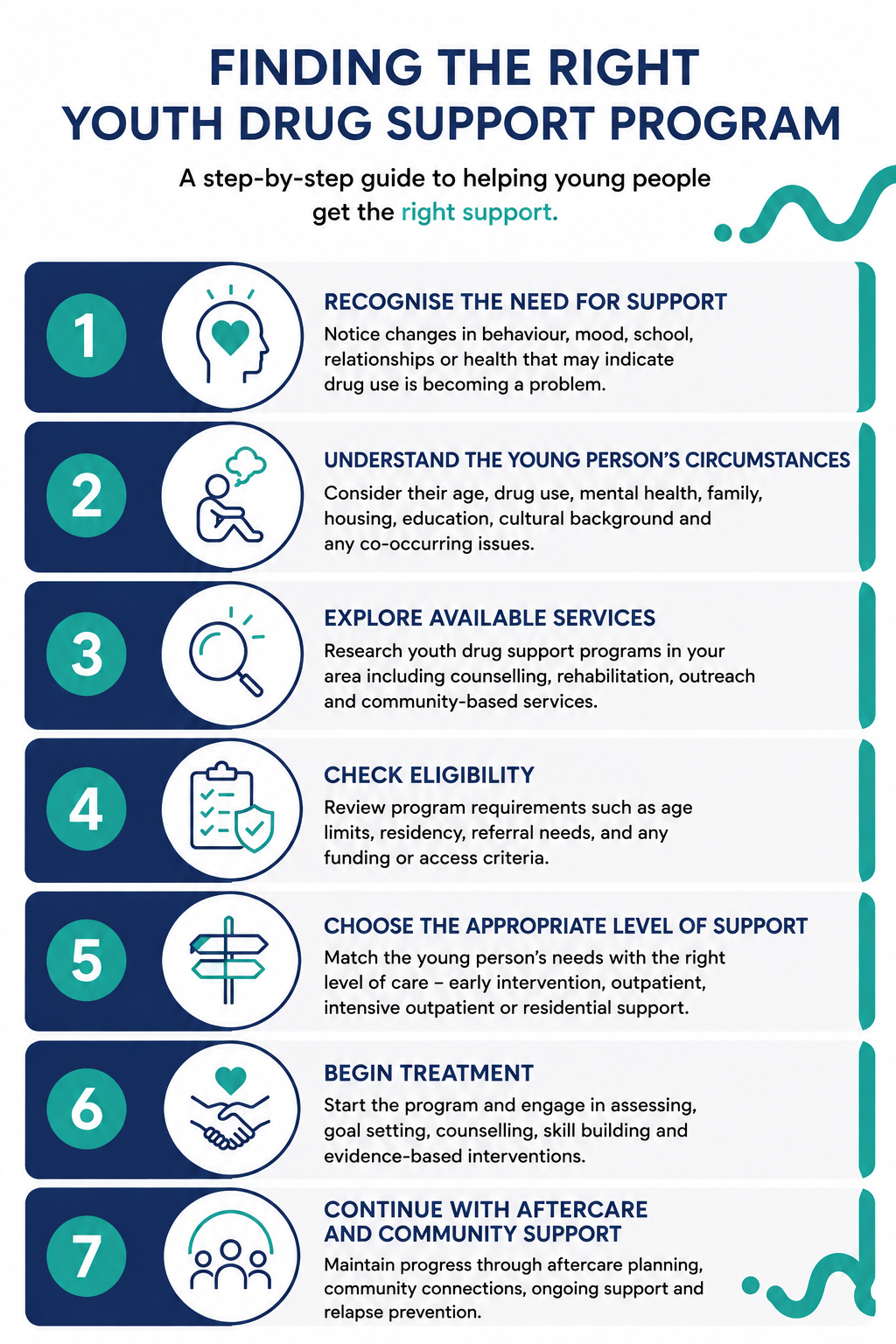
Finding the right support for a young person experiencing drug or alcohol dependency is not always straightforward. Support can range from counselling and community-based care to withdrawal, residential rehabilitation and aftercare, and the right option will depend on the young person’s age, circumstances and level of support needed.
Understanding what each type of service offers can make it easier to know where to start.
How Do You Find the Right Youth Drug Support Program in Australia?
Finding the right youth addiction support program in Australia depends on the young person’s age, drug or alcohol use, wellbeing, personal circumstances and support needs. Options can include counselling, community-based alcohol and other drug services, supported withdrawal, residential rehabilitation and aftercare. A GP or qualified alcohol and other drug service can help assess the situation and identify an appropriate next step.
What are Some Types of Youth Drug Support?
Drug and alcohol support can look very different depending on what a young person is experiencing. For some, the right starting point may be a conversation with a GP or counsellor. Others may need more structured support through a community service, outpatient treatment, withdrawal program, residential rehabilitation or hospital-based care. Peer support and recovery groups may also be helpful for some young people.
The right option will depend on the young person’s needs, circumstances and preferences, and these are just some of the types of support that may be available.
Counselling and early support
Counselling can be a useful starting point when a young person is concerned about their drug or alcohol use but may not need intensive treatment. A GP, counsellor, helpline or youth service can help them talk through what is happening, consider how it is affecting their wellbeing and relationships, and work out what kind of support might be useful next.
Community-based treatment
Community-based treatment allows young people to receive ongoing support while staying connected with home, school, work and their local community. Depending on the service, this may include counselling, case management, health care, mental health support and practical help with areas such as housing, education or employment.
Withdrawal support
Stopping or reducing some substances can cause withdrawal symptoms, and the level of support needed will vary from person to person. A doctor or alcohol and other drug service can help assess the safest approach. Healthdirect notes that withdrawal may be managed at home, in a residential service or in hospital, depending on the level of medical support and supervision required.
For young people who need residential withdrawal care, David Martin Place provides eligible young people aged 16–24 with up to 10 days of care and 24/7 medical support. Counselling, case management and other support are also available during their stay, with the next step based on each young person’s needs and goals.
Residential rehabilitation
Residential rehabilitation offers a more structured level of support for young people who need time away from their usual environment to focus on treatment and recovery. Programs can combine counselling and therapeutic support with practical help around daily routines, relationships, education and employment.
As part of Mission Australia’s Triple Care Farm, the 12-week Residential Rehabilitation Program supports eligible young people aged 16–24 through one-to-one counselling, group therapy, living skills, education and vocational training, sport and recreation.
Residential rehabilitation can be a valuable option for some young people, but it is not the right pathway for everyone. The most appropriate level of care will depend on the young person’s needs, circumstances and readiness to take part in treatment.
Aftercare
Aftercare helps young people adjust to life after more intensive treatment and continue building on the progress they have made. Support can focus on practical areas such as housing, healthcare, relationships, education and employment, as well as maintaining recovery goals in everyday life.
The Youth Network’s Aftercare Program provides up to six months of wraparound support following withdrawal and/or rehabilitation. A dedicated Aftercare Worker can help young people reconnect with services, find stable housing, return to study or work and manage the challenges that can come with returning to the community.
The type and length of aftercare will vary between services, but ongoing support can be an important part of helping young people transition out of treatment and back into daily life.
What Should You Consider When Choosing a Program?
These questions can help when speaking with a GP, counsellor or alcohol and other drug service.
1. Is the service suitable for the young person’s age? Age requirements can vary, even between youth-specific services, and not every general or all-ages service provides youth-specific care.
2. What level of care is needed? A professional may consider the substances involved, frequency of use, previous attempts to cut down or stop, withdrawal risks and the effect on daily life.
3. What else is going on? Mental health, trauma, housing, family relationships, education and employment can all influence what support will be useful.
4. How much structure would help? Options range from counselling and community appointments to withdrawal support, residential care and aftercare.
5. Can the young person access the service? Location, transport, cost, waiting periods and referral requirements matter.
6. What happens afterwards? Ask how the service plans for discharge, referrals and ongoing support.
Looking for support? Learn more about the youth-specific alcohol and drug treatment and recovery services Martin Youth Foundation helps fund, including Mission Australia’s Triple Care Farm and The Youth Network, and where to find help.
What Happens in a Youth Drug Support Program?

Most services begin with an assessment of the young person’s drug and alcohol use, health, circumstances and goals. Support may then include:
- individual or group counselling
- medical care during withdrawal where needed
- mental health support
- living skills
- education or vocational training
- sport or recreation
- family or community involvement, with the young person’s agreement
- planning for aftercare and returning to community life.
These different types of support reflect the broader approach behind youth-specific addiction treatment, which recognises that recovery can involve much more than addressing drug or alcohol use alone.
Why Can Youth-specific Care Matter?
Young people may be dealing with school, first jobs, changing relationships, housing pressures and growing independence alongside drug or alcohol concerns. Youth-specific care is designed around that stage of life, so treatment can address more than substance use alone. By bringing together support for mental health, education, employment, relationships and practical living skills, it can help young people build the confidence and stability they need to move forward.
What is Triple Care Farm?
Triple Care Farm is a youth-specific alcohol and drug treatment program for eligible young people aged 16 to 24. Mission Australia operates the program, with Martin Youth Foundation as its major philanthropic funder.
What makes Triple Care Farm different is the way it connects withdrawal, residential rehabilitation and aftercare as part of a broader recovery pathway. Young people can receive support that responds not only to drug or alcohol use, but also to areas such as mental health, relationships, education, employment and independent living.
Not every young person follows the same pathway, and eligibility and referral requirements apply. For current criteria and next steps, see how to apply to Triple Care Farm.
What Support is Available for Families?
Drug and alcohol use can affect the whole family, and parents and carers may have their own questions about what to say, how to offer support and where to turn for reliable information.
Family Drug Support Australia provides a 24-hour support line, information and programs for families and friends, while Martin Youth Foundation’s youth drug and alcohol resources bring together trusted information, support services and practical tools.
How Can a Young Person Take the First Step?
If a young person is ready to seek help, there are a few practical ways to get started.
1. Talk to someone you trust. This might be a parent, carer, teacher, youth worker, GP, counsellor or health professional.
2. Contact an alcohol and other drug service. The National Alcohol and Other Drug Hotline provides free and confidential information and support on 1800 250 015.
3. Ask practical questions. Check the age range, type of care, location, cost, waiting time, family involvement and what happens after treatment.
4. Check the application process. Some services accept direct enquiries; others require a referral or assessment.
What if a Young Person is Not Ready for Residential Treatment?
Residential rehabilitation is only one pathway. Counselling, community alcohol and other drug services, a GP, youth mental health services, family support and harm-reduction information can all provide a starting point.
A young person may also need different types of support at different stages.
What if Help is Needed Urgently?
Do not wait for a treatment application if someone is in immediate danger. Call 000 in an emergency.
For immediate crisis support, Lifeline is available on 13 11 14 and Kids Helpline on 1800 55 1800. Martin Youth Foundation’s Find Help page lists these and other current support options.
Frequently Asked Questions
What is a youth drug support program?
It is a service that helps young people with concerns related to alcohol or drug use. Support may include counselling, community care, withdrawal, residential rehabilitation or aftercare.
How do I find a youth drug support program in Australia?
A GP or alcohol and other drug service can help assess what kind of support may be appropriate and explain the options available.
Do young people need residential rehabilitation?
Not always. Many young people receive support through counselling, community treatment or other health services. Residential rehabilitation is one option when more intensive support is needed.
What is the difference between withdrawal and rehabilitation?
Withdrawal focuses on stopping or reducing alcohol or drug use safely. Rehabilitation usually involves a longer period of counselling, therapeutic support and skills development.
Can families get support too?
Yes. Family services can provide information, counselling, guidance and their own support network.
What is Triple Care Farm?
Triple Care Farm is a Mission Australia youth alcohol and drug treatment program for eligible young people aged 16 to 24. Martin Youth Foundation is its major philanthropic funder.
How old do you have to be to access Triple Care Farm?
Current eligibility information states that applicants must be aged 16 to 24 and meet the program’s other criteria.
What happens after youth drug rehabilitation?
Aftercare or community referrals can help with the transition out of treatment. Triple Care Farm’s Aftercare Program can provide up to six months of support.
Where can I get urgent help for a young person?
Call 000 if someone is in immediate danger. Lifeline, Kids Helpline and the services on Martin Youth Foundation’s Find Help page can also provide immediate or crisis support.
If you would like to learn more about Martin Youth Foundation’s role in funding services such as Mission Australia’s Triple Care Farm, contact our team
This article provides general information only and is not a substitute for professional medical or mental health advice. If you are concerned about a young person’s drug or alcohol use, speak with an appropriately qualified health professional or alcohol and other drug service.
Fewer People Are Getting Alcohol and Drug Treatment in Australia. Here’s Why That Should Worry Us
New national data shows the number of Australians accessing alcohol and other drug treatment has fallen. For young people, the figures reveal both a warning sign and a clear opportunity for earlier support.
The Australian Institute of Health and Welfare (AIHW) has released its Alcohol and other drug treatment services in Australia annual report 2024–25, the most comprehensive national picture we have of who is accessing publicly funded alcohol and other drug (AOD) support, and who isn’t.
On the surface, the numbers look steady. Treatment agencies delivered around 244,400 treatment episodes to an estimated 127,800 people aged 10 and over in 2024-25. But look a little closer and a more concerning trend emerges: since 2019-20, the number of people accessing treatment has dropped by 8.2 per cent, falling from 139,295 to 127,804, with treatment rates falling from 623 to 527 per 100,000 people. Fewer people are walking through the door, even as the need for youth alcohol and other drug treatment remains urgent.
At Sir David Martin Foundation, this data matters to us directly. The programs we fund through our service partner Mission Australia, including Triple Care Farm and Youth Network aftercare, exist to make sure young people don’t fall through the gaps this report is starting to reveal.
What young people are actually presenting with
The report confirms something we see reflected in the young people supported through the programs we fund: substance use patterns shift significantly with age, and the drug of concern for a 15-year-old looks very different to that of a 45-year-old.
Cannabis was by far the most common principal drug of concern for the youngest clients, accounting for 53 per cent of treatment episodes for those aged 10–19 and 24 per cent of episodes for those aged 20-29. Methamphetamine was the standout concern for those aged 30-39, at 32 per cent of episodes. Alcohol, by contrast, only overtakes these as the dominant concern from age 40 onward, accounting for 45 per cent of episodes for people aged 40–49, rising to 75 per cent for those aged 60 and over.
Of the 117,132 people who received treatment for their own alcohol or drug use in 2024-25, 7.7 per cent (9,009 people) were aged 10-19. Among clients accessing treatment for the very first time, 14 per cent were in this same age bracket, a reminder that adolescence is often when substance use first surfaces and when early intervention can have the greatest impact.
Young people need a different kind of care
One of the more telling findings is how differently young clients are treated once they do reach a service. Across most age groups, counselling was followed by assessment only as the two most common treatment types. But for clients aged 10-19, the pattern was different: counselling (42 per cent) was followed by support and case management (29 per cent), rather than a standalone assessment.
Older clients (those aged 40 and over) were also more likely to receive withdrawal management, at 7.8 to 9.8 per cent of episodes, compared with just 3.5 per cent for clients aged 10-19. This may mean that young people are less likely to need clinical detoxification, or it could mean that there are not enough youth-specific withdrawal services available to access. David Martin Place was the first and remains the only youth-specific withdrawal centre in NSW.
What we do know is that young people benefit from wraparound, relationship-based support that helps them navigate school, family and identity alongside substance use. It’s exactly the model of care that underpins the youth-specific programs we fund, where treatment is never just about the substance itself.
The system is growing, but access still isn’t equal
There is genuine good news held in this report. Over the ten years to 2024-25, the number of publicly funded AOD agencies across Australia grew by 66 per cent, from 791 to 1,316. That’s a substantial national investment in treatment capacity.
But more than half of those agencies (55 per cent) are located in major cities, leaving young people in regional and remote communities with far fewer local options. For a young person in a rural town already facing stigma and long waitlists, “more services nationally” can still mean “no services nearby.”
There is also a quieter warning in the referral data. Diversion into treatment, where police, courts or other services connect someone with support rather than punishment, has fallen sharply, from 17 per cent of referrals in 2015-16 to just 7.2 to 8.0 per cent in 2024-25. Diversion pathways are one of the clearest opportunities for early intervention, particularly for young people whose substance use is only just beginning. A declining diversion rate suggests fewer young people are being caught by that safety net before things escalate.
Reasons for hope
It isn’t all difficult news. Among clients who did access treatment, 59 per cent of episodes ended in an expected or planned completion in 2024-25, a figure that has stayed remarkably stable since 2015-16. The median length of treatment was four weeks for people receiving support for their own alcohol or drug use, and self or family referral remains the single most common way people find their way into care.
That last point matters enormously for families. It confirms that parents, siblings and loved ones are still the most powerful bridge between a young person and the help they need. Families don’t need to wait for a crisis or a court order to reach out. Often, they’re the ones who notice first.
What this means for young Australians, families and our work
Read together, these findings paint a clear picture. Young people present differently, need different care, and are being reached through diversion less often than they were a decade ago, all while overall treatment numbers decline. That’s not a reason to lose hope. It’s a reason to invest in the pathways that work: family-led referral, relationship-based case management (like aftercare workers in our Youth Network), and youth-specific programs that meet young people where they are, before their substance use becomes entrenched.
This is precisely the gap the programs we fund are designed to close. Triple Care Farm supports young people aged 16 to 24 through withdrawal, rehabilitation and aftercare in a setting built around connection rather than clinical detox. Youth Network aftercare extends that support in four locations nationally into the community once formal treatment ends, because recovery doesn’t stop when someone walks out the door.
The AIHW’s data is a call to action, not a statistic to file away. Every percentage point in this report represents a young person, and often a family, navigating one of the hardest chapters of their life. The earlier we reach them, the better their chances.
If you’d like to help more young Australians access the early support they need, donate to Sir David Martin Foundation or learn more about the programs we fund.
Sources
Australian Institute of Health and Welfare (2026). Alcohol and other drug treatment services in Australia annual report 2024–25. Canberra: AIHW.
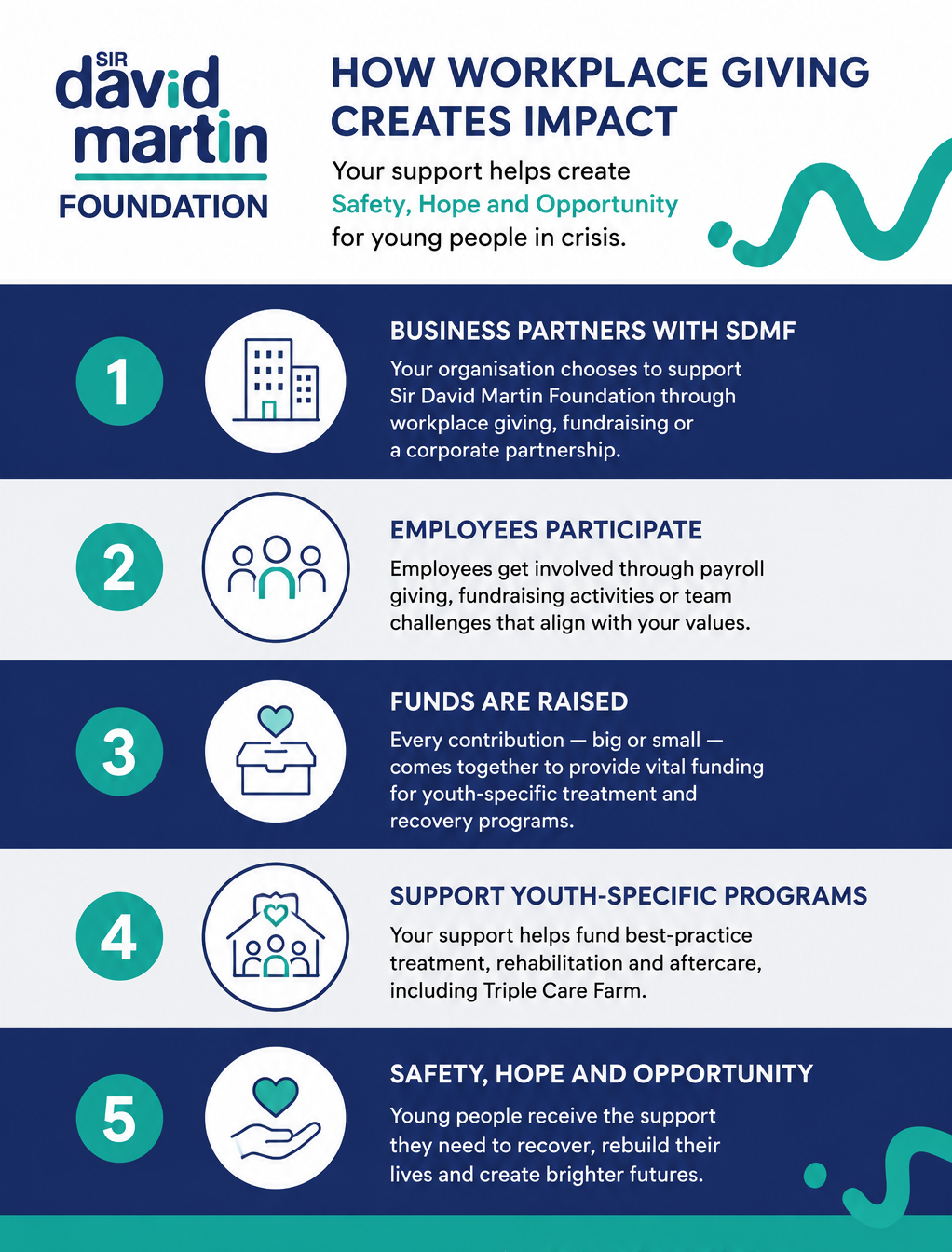
Businesses can play an important role in creating better opportunities for young people facing drug and alcohol challenges. Through workplace giving, fundraising and long-term corporate charity partnerships, organisations can turn shared values into practical support for youth-specific treatment and recovery programs.
By partnering with Sir David Martin Foundation, businesses can help strengthen best-practice models of care while giving employees meaningful ways to contribute to a cause that delivers lasting community impact.
How Do Corporate Charity Partnerships Support Young People in Crisis?
Corporate charity partnerships enable businesses to support important community causes through workplace giving, fundraising and employee engagement initiatives. By partnering with organisations such as Sir David Martin Foundation, businesses can help fund youth rehabilitation programs, support young people experiencing drug and alcohol challenges and create meaningful social impact while engaging their workforce.
There is no single model that suits every workplace. Some organisations introduce payroll giving, while others hold fundraising events, match employee donations or build a longer-term partnership. The most effective approach is realistic, clearly communicated and aligned with the values of both partners.
What Are Corporate Charity Partnerships?
Corporate charity partnerships are relationships between businesses and charitable organisations working towards shared social impact goals. They may include donations, workplace fundraising, employee giving, matched contributions, sponsorship or other agreed support.
For Sir David Martin Foundation, these partnerships help advance its commitment to providing safety, hope and opportunity for vulnerable young people. Through corporate partnerships, businesses can help support young Australians experiencing drug and alcohol addiction through youth-specific treatment and recovery programs.
The Sir David Martin Foundation corporate partnerships program provides a starting point for organisations considering workplace giving, fundraising or longer-term involvement.
Why Businesses Choose Workplace Giving
A workplace giving program allows employees to make regular donations directly from their pre-tax salary. This means employees can receive the tax benefit immediately, rather than waiting until the end of the financial year.
It is also one of the simplest and most efficient ways for a business to begin a Corporate Social Responsibility program. Employees can nominate an amount that suits them, while their combined contributions provide ongoing support for the chosen cause.
Participation should remain voluntary and transparent. Employees should understand how the process works, where their donations are going and how they can change or stop their contribution.
Practical Ways Your Workplace Can Get Involved
Corporate support can be adapted to suit the size, capacity and culture of the organisation.
- Payroll giving: Employees contribute a regular amount from their pre-tax salary.
- Matched giving: The business matches eligible employee donations up to an agreed limit.
- Corporate donations: The organisation makes a one-off or recurring contribution.
- Office fundraising: Employees organise a shared activity to raise funds and awareness.
- Fundraising pages: Teams create a dedicated page to collect donations and track their progress.
- Professional or in-kind support: Businesses may contribute relevant expertise, services or resources where these meet an identified need and are agreed with Sir David Martin Foundation.
Looking for a meaningful way to give back? Explore how your workplace can support Sir David Martin Foundation through workplace giving, fundraising or a corporate charity partnership.
Fundraising Ideas for Businesses
A workplace fundraiser does not need to be elaborate. Activities often work best when they are easy to organise, inclusive and suited to the team.
Practical ideas include:
- Charity morning tea: Invite employees to bring food and make a voluntary donation.
- Casual dress day: Ask participating staff to contribute a small amount.
- Workplace BBQ or lunch: Collect donations or sell tickets for a shared meal.
- Friday social: Turn a regular team gathering into a fundraising opportunity.
- Step or fitness challenge: Collect sponsorship while working towards a shared goal.
- Workplace auction: Invite employees or local businesses to donate suitable items or experiences.
- Social club raffle: Hold a raffle where permitted and in line with relevant legal requirements.
- EOFY campaign: Encourage donations during a set period, with matched giving where possible.
- Payroll giving campaign: Explain regular giving internally and invite voluntary participation.
Fundraising can also extend beyond the office. Employees may celebrate a birthday or anniversary by requesting donations, raise money in memory of a loved one, take on a physical challenge, give up a favourite treat for a month or create their own activity.
Workplaces can start their own fundraiser to make donations easier to collect and track.
Sir David Martin Foundation also has fundraising tips and resources available to help make activities enjoyable, manageable and successful. Its fundraising team can help supporters choose an idea, establish a goal and plan the activity.
How Corporate Support Helps Triple Care Farm

Sir David Martin Foundation is the major philanthropic funder of Mission Australia’s Triple Care Farm, a youth-specific addiction treatment centre for young Australians aged 16 to 24.
Triple Care Farm provides connected support across withdrawal, residential rehabilitation and aftercare. Young people may receive clinical and psychosocial treatment, counselling, education, vocational training, living-skills support, sport and recreation, followed by assistance as they return to the community.
Corporate donations, workplace giving, and fundraising contribute to the broader funding that helps make this model possible. They should not be understood as funding one guaranteed service or outcome. Instead, they contribute to sustainable support across treatment, recovery and aftercare.
Benefits of a Long-Term Corporate Charity Partnership
One-off fundraising is valuable, but a longer partnership creates continuity. Regular support helps charities plan more confidently and gives employees different ways to participate.
A business might combine payroll giving with an annual event, matched donations or internal awareness activities. Over time, employees can better understand the cause and remain connected to the purpose behind the partnership.
This creates a more authentic approach to Corporate Social Responsibility. The focus is not simply on holding an event, but on building a practical relationship with an organisation whose work aligns with the company’s values.
Why Partner with Sir David Martin Foundation?
Since 1990, Sir David Martin Foundation has supported vulnerable young Australians affected by drug and alcohol addiction. As the major philanthropic funder of Triple Care Farm, it helps enable youth-specific treatment, rehabilitation and aftercare that provide safety, hope and opportunity.
This approach recognises that young people have different developmental needs, circumstances and recovery goals from adults, which is why youth-specific addiction treatment matters in recovery.
Businesses of all sizes can contribute. A smaller organisation may begin with an office fundraiser or workplace giving program, while a larger business may choose matched donations, a multi-year partnership or a broader employee engagement initiative.
Getting Started with Workplace Giving and Fundraising
A simple corporate giving plan can begin with six steps:
- Choose a charity partner aligned with your organisation’s values.
- Select an approach such as workplace giving, fundraising or a longer-term partnership.
- Set a realistic goal for donations, fundraising or employee participation.
- Explain the opportunity clearly and keep participation voluntary.
- Use the charity’s resources to support and promote the activity.
- Review the partnership and identify ways to develop it over time.

Frequently Asked Questions
What are corporate charity partnerships?
Corporate charity partnerships are structured relationships in which businesses support charitable organisations through donations, fundraising, employee engagement, sponsorship or other agreed activities.
How does workplace giving work?
Employees nominate a regular donation that is processed from their pre-tax salary. They receive the associated tax benefit immediately through payroll rather than waiting until the end of the financial year.
Can small businesses participate?
Yes. A small business can begin with a morning tea, office fundraiser, one-off donation or workplace giving program suited to the size of its team.
What types of workplace fundraising are most effective?
Activities that are simple, inclusive and easy to promote usually work best. These may include morning teas, casual dress days, BBQ lunches, fitness challenges, Friday socials, auctions or raffles where permitted.
Can employees fundraise outside the workplace?
Yes. Employees can celebrate a special occasion, take on a physical challenge, fundraise in memory of someone, give something up for a month or develop their own fundraising activity.
How can our business partner with Sir David Martin Foundation?
Businesses can explore workplace giving, fundraising and longer-term partnership opportunities through the corporate partnerships page.
Help Create Safety, Hope and Opportunity
Every workplace has the potential to make a meaningful difference. Whether through payroll giving, an office fundraiser, a physical challenge or a long-term corporate charity partnership, your organisation can help support best-practice treatment for young people in crisis.
To discuss how your business can get involved, contact Philanthropy Manager Jenny Leahy at [email protected] or call (02) 9538 0916.
When a young person is experiencing drug and alcohol dependency, treatment needs to reflect their age, circumstances and goals. Triple Care Farm provides an integrated pathway through withdrawal, residential rehabilitation and aftercare, rather than treating detox as the end of the process.
Operated by Mission Australia and supported by Sir David Martin Foundation as its major philanthropic funder, the program combines clinical care, counselling, education, practical skills and ongoing community support for young Australians aged 16–24.
What is Triple Care Farm?
Triple Care Farm is a youth-specific drug and alcohol treatment program for Australians aged 16–24 experiencing drug and alcohol dependency. It combines medically supported withdrawal, a 12-week residential rehabilitation program and up to six months of aftercare, helping young people address addiction, strengthen their wellbeing and develop skills for a healthier, more independent future.
The program provides a safe residential setting where young people can receive clinical and psychosocial care while working towards goals related to their health, relationships, education, employment and independent living. Support is tailored to each participant rather than following a single approach for everyone.
Young people who come to Triple Care Farm may also live with mental health challenges or the effects of trauma. The program recognises that recovery involves more than addressing substance use alone, so support may include medical care, counselling, case management, education, recreation and practical life skills tailored to each young person.
Who can benefit from Triple Care Farm?
Triple Care Farm is intended for young people aged 16–24 who are experiencing drug and alcohol dependency and can participate in the program. Applicants must be Australian residents or currently living in Australia, and they must complete the program before turning 25.
Participation is voluntary. A parent, carer, support worker or healthcare professional may help with a referral, but the young person must know about the application, agree to it and demonstrate commitment during assessment.
Where mental health challenges are also present, these can be considered as part of the young person’s individual treatment and support plan.
Admission is not automatic. Eligible applicants complete an interview and assessment, and approved applicants may need to wait until a suitable place becomes available.
How does Triple Care Farm support recovery?
The Triple Care Farm program brings three connected stages together. A young person may enter through withdrawal or rehabilitation, while aftercare helps maintain continuity when they return to the community.
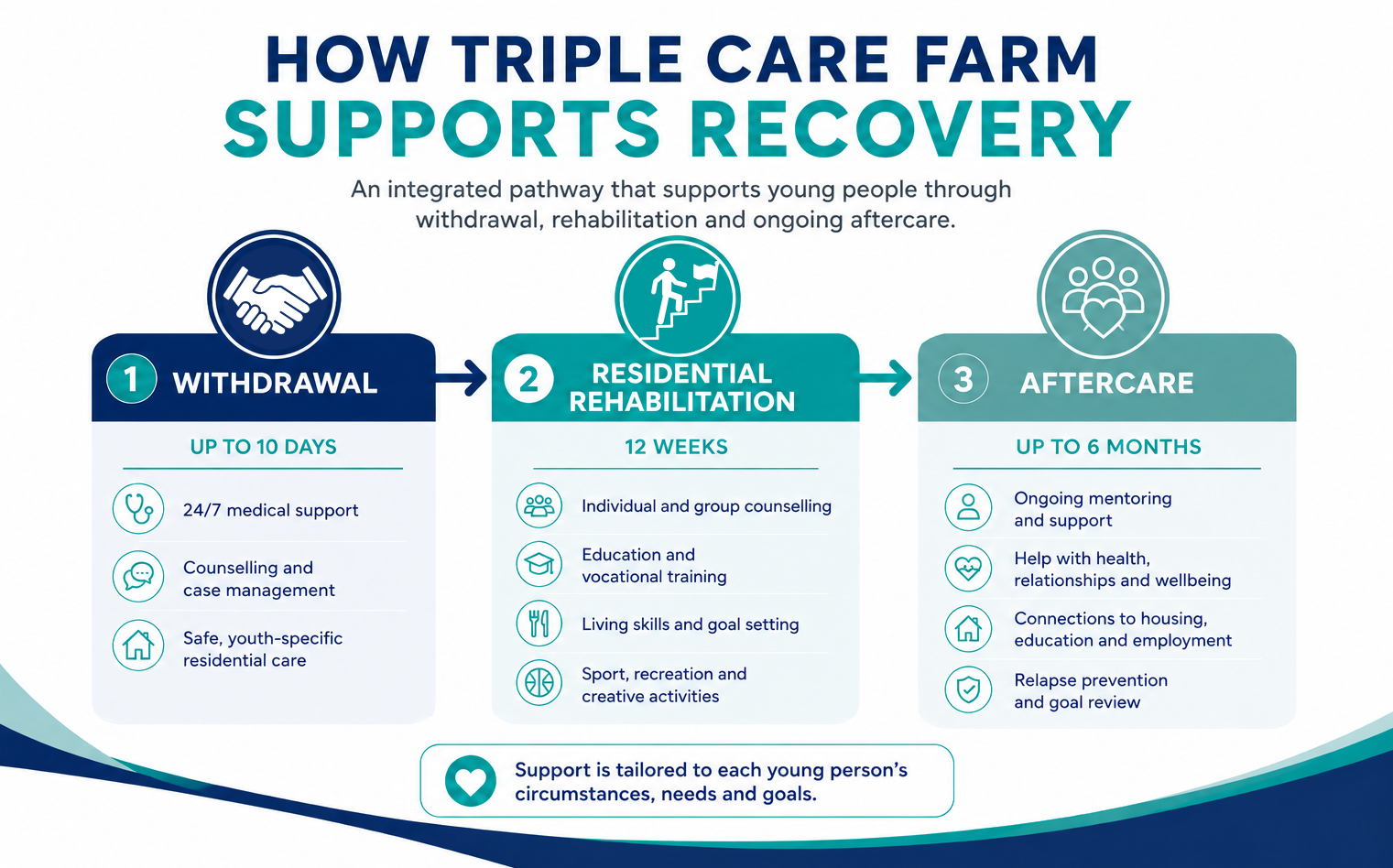
Withdrawal in a safe clinical setting
David Martin Place is Triple Care Farm’s youth-specific withdrawal facility. It provides up to 10 days of residential care with 24/7 medical support, helping young people withdraw from alcohol or other drugs safely.
Support can include medical care, counselling, case management, family support, education activities, sport and recreation, and nicotine replacement therapy when appropriate. Clinical oversight allows immediate withdrawal needs to be considered alongside the young person’s wider circumstances.
A young person may then move into Residential Rehabilitation or return to the community with Aftercare support, depending on their assessment and goals.
Residential rehabilitation for 12 weeks
The Residential Rehabilitation Program provides 12 weeks of structured youth drug and alcohol rehabilitation. Young people receive one-to-one counselling and group therapy, supported by counsellors, psychologists, case managers and other program staff.
Treatment is combined with practical daily experiences. Participants may work on cooking, cleaning, budgeting, hygiene, communication and positive relationships. They can also take part in vocational education and training, employment preparation, creative activities, sport and recreation.
Plans are tailored to individual needs and goals. These may include rebuilding health, improving family relationships, returning to study, preparing for employment or developing greater independence.
Aftercare for up to six months
The transition out of residential treatment can bring new pressures. Young people may return to familiar triggers, unstable housing, difficult relationships or uncertainty around education and work.
The Aftercare Program provides up to six months of wraparound support after withdrawal and/or rehabilitation. A dedicated Aftercare Worker offers mentoring and practical assistance as the young person applies what they have learned in everyday life.
Support may include reconnecting with healthcare, finding stable housing, attending appointments, returning to education, exploring employment and maintaining personal goals.
If you or someone you know is considering treatment, explore the Triple Care Farm program and its application requirements to understand which pathway may be suitable.
Why is a holistic approach important?
Stopping or reducing substance use is only one part of recovery. A young person may also need help with trauma, anxiety, depression, disrupted education, housing insecurity, family conflict or limited experience of independent living.
A holistic youth rehabilitation program considers how these areas interact. Clinical and therapeutic care can help a young person understand substance use, triggers and coping strategies. Education and vocational training can create realistic next steps. Living skills and structured routines can make returning to the community more manageable.
Understanding why youth-specific addiction treatment matters in recovery helps show why care should address substance use alongside mental health, trauma and a young person’s wider circumstances.
Individualised care also allows staff to respond to each young person’s circumstances and goals. After completing the program, Kyle* chose to move away from the environment and influences connected to his substance use. With support from his Aftercare Worker, he secured stable accommodation, connected with community health services and returned to work in his trade.
His experience reflects the role of Aftercare in helping young people turn the progress made during rehabilitation into meaningful changes in housing, employment, health and daily life.
*Name changed to protect privacy.
Skills young people can develop
Depending on their needs and goals, participants may develop skills in:
- Recognising triggers and using healthier coping strategies
- Communicating and building positive relationships
- Creating routines that support physical and mental wellbeing
- Cooking, cleaning, budgeting and personal care
- Participating in education or vocational training
- Preparing for employment and further study
- Navigating appointments, housing and community services
- Setting realistic goals and asking for help
These capabilities can support greater independence, but progress is personal and recovery does not follow the same timeline for everyone.
What makes Triple Care Farm different?
Triple Care Farm combines youth-specific clinical care with psychosocial support, education, living skills and ongoing aftercare. Its Residential Rehabilitation Program is accredited by the Australian Council on Healthcare Standards, and the model connects immediate treatment with community reintegration.
Mission Australia’s 2024 evaluations of Triple Care Farm recorded positive outcomes across substance use, wellbeing, housing, education and employment:
- 100% reduction in chronic substance use
- 70% reduction in suicide attempts
- 73% in secure and stable housing
- 69% engaged in employment
- 53% engaged in education
These results reflect the young people included in the evaluations and do not predict an individual participant’s experience. Recovery is influenced by personal circumstances, engagement and access to continuing care.
How to access Triple Care Farm

A young person can apply for themselves, or an application can be submitted with help from a family member, guardian or professional. Referrals are accepted from across Australia.
The process begins by checking eligibility and completing the application form. Professional referrers may also need to submit a risk assessment and relevant reports. After the forms have been submitted, the young person must contact the Triple Care Farm Intake Coordinator to continue the application process.
Potentially eligible applicants are invited to a video interview. The application is then reviewed by an assessment committee. If approved, the young person joins the waiting list until a place becomes available.
Current fees and arrangements for young people under government care are provided during the application process and can be discussed with the Intake Team.
The Triple Care Farm application page provides current forms and eligibility details. General enquiries can be directed through Sir David Martin Foundation’s contact page.
Stories from young people who have attended Triple Care Farm offer further insight into the different paths recovery can take.
Frequently asked questions
What is Triple Care Farm?
Triple Care Farm is a Mission Australia youth drug and alcohol treatment service supported by Sir David Martin Foundation as its major philanthropic funder. It offers withdrawal, 12-week residential rehabilitation and up to six months of aftercare.
Who is eligible for Triple Care Farm?
Applicants must generally be aged 16–24, be experiencing problematic drug or alcohol use, be able to participate, demonstrate voluntary commitment and be an Australian resident or currently living in Australia. Eligibility is confirmed through assessment.
How long does the program last?
The Withdrawal Program provides up to 10 days of care. Residential Rehabilitation runs for 12 weeks. Aftercare may continue for up to six months.
What support is available after rehabilitation?
A dedicated Aftercare Worker can provide mentoring and practical assistance with health, housing, education, employment, relationships and personal goals.
Is Triple Care Farm only for drug addiction?
No. The program supports young people experiencing problematic alcohol or other drug use and can also respond to mental health challenges that may be affecting their recovery.
How can someone apply?
Review the Triple Care Farm application process, complete the relevant forms and contact the Intake Coordinator after submission.
Meeting the basic criteria does not guarantee admission, as applications are assessed individually and places depend on availability.
Building a healthier future with the right support
Recovery is rarely a straight line, but young people should not have to navigate it alone. Triple Care Farm connects clinical treatment with counselling, education, practical skills and continuing support, giving participants time and space to work towards goals that matter to them.
Explore Triple Care Farm, review the application process or support Sir David Martin Foundation’s work helping young Australians access youth-specific addiction treatment and aftercare.
Nitrous oxide, commonly known as nangs or laughing gas, has legitimate uses in medicine, food production and industry. However, concern has grown about recreational misuse, particularly the availability of large cylinders and the risks linked with repeated or heavy use.
From November 2026, NSW will tighten controls on who can buy nitrous oxide, retail sales volumes, supply times, delivery and product displays. The aim is to reduce easy recreational access while improving awareness and access to support.
Why is NSW Tightening Nangs Laws?
NSW is tightening laws around the sale of nitrous oxide (“nangs”) to help reduce misuse, particularly among young people. The changes aim to limit recreational access while encouraging greater awareness of the health risks and the importance of accessing youth drug and alcohol resources in Australia for education, prevention and support.
The NSW Government’s official announcement says the growing availability of large cylinders has enabled heavier use and contributed to serious neurological injuries, including spinal cord damage. The reforms will restrict retail volume, prohibit supply to people under 18 and reduce the rapid and late-night access that can make nangs easy to obtain recreationally.
Legislation alone cannot address every reason a young person may use a substance. Prevention also requires accurate drug education, non-judgemental conversations and accessible support. The Alcohol and Drug Foundation’s review of nitrous oxide harm reduction recommends providing young people with clear, evidence-based information about nitrous oxide, alongside accessible pathways to support.
What are Nangs?
Nangs are small bulbs or larger canisters containing nitrous oxide, a colourless gas used for sedation and pain relief. It is also used as a propellant in whipped cream dispensers and for some industrial purposes.
When misused recreationally, nitrous oxide is inhaled for brief effects that may include euphoria, light-headedness, numbness, confusion and reduced coordination. Because the effects generally last only a few minutes, some people may use it repeatedly.
The product’s legal commercial uses and familiar packaging can create the impression that it is harmless. Legal availability, however, does not mean recreational use is risk-free. The Alcohol and Drug Foundation’s nitrous oxide facts explain that serious acute and long-term harms can occur, particularly with frequent or high-volume use.
What Exactly is Changing in NSW?
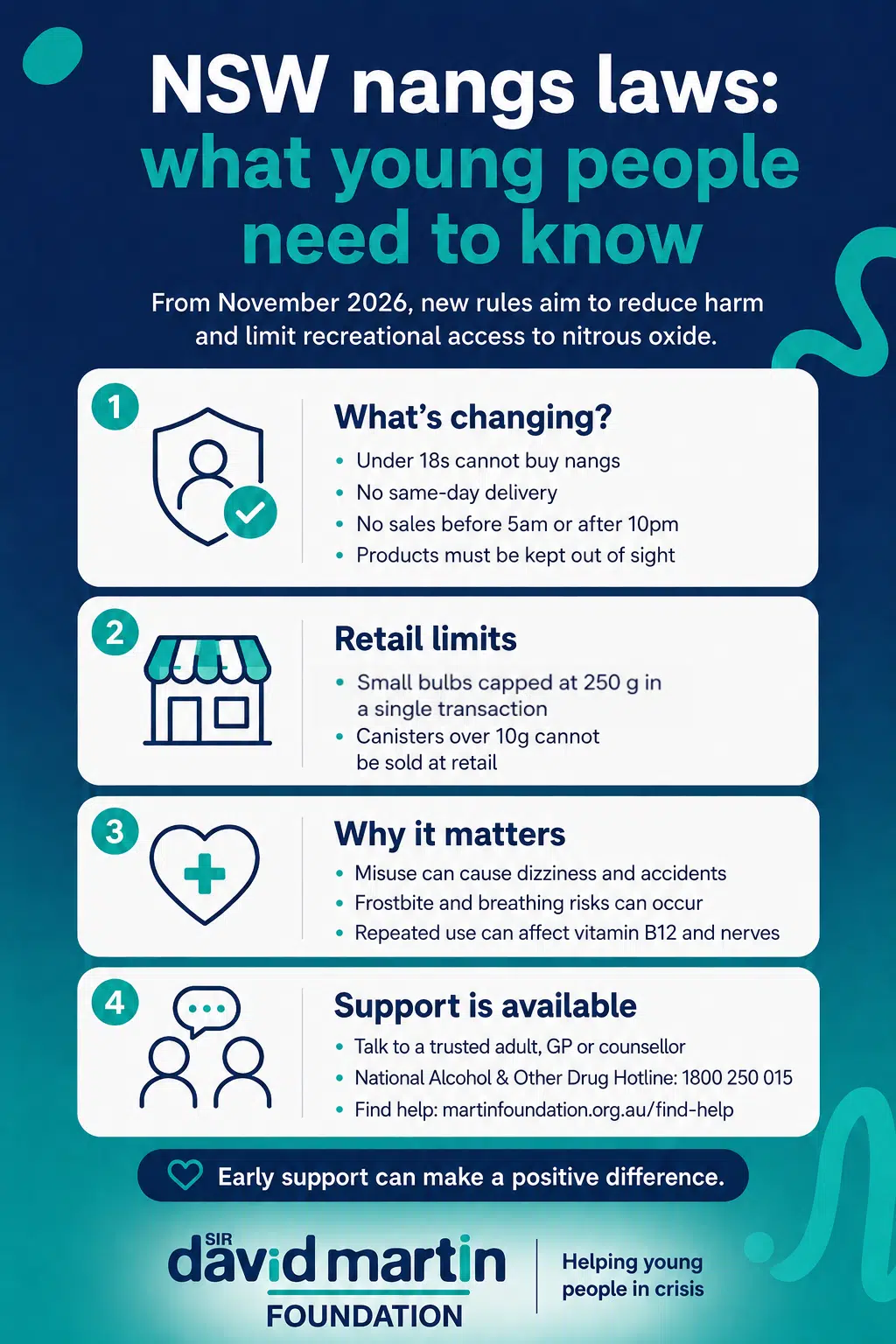
The new requirements are due to begin in November 2026 under the Medicines, Poisons and Therapeutic Goods Regulation 2026.
The reforms will:
- prohibit retail supply to anyone under 18
- limit small bulbs containing 8 to 10 grams to 250 grams in a single transaction
- ban retail sales of canisters or cylinders containing more than 10 grams
- prohibit same-day delivery and supply
- restrict sales before 5am and after 10pm
- prevent products being visibly displayed to customers.
Maximum penalties will be $2,200 for individuals and $11,000 for corporations per offence. Exemptions will remain for legitimate food and beverage, therapeutic, industrial and commercial uses.
What are the Health Risks of Nitrous Oxide Misuse?
Risk varies according to the amount and frequency of use, a person’s health and whether alcohol or other drugs are involved. Serious harm is more commonly associated with frequent, repeated or high-volume use, although acute injuries can also occur.
Short-term effects can include dizziness, confusion, impaired coordination and fainting. These may increase the chance of falls and other accidents. Insufficient oxygen can cause hypoxia, while the extremely cold gas can cause frostbite or cold burns. NSW Health also identifies lung injuries, cardiac abnormalities and asphyxiation among the potential harms.
Repeated use can interfere with the body’s ability to use vitamin B12, which is essential for healthy nerve function. This can contribute to numbness, weakness, difficulty walking and damage to the brain, nerves or spinal cord. A 2026 adolescent case series and systematic literature review also highlighted neurological damage associated with chronic misuse in young people.
Regular use may also be associated with psychological dependence, depression and, in some cases, psychosis. Separately, physical symptoms such as persistent tingling or numbness, weakness, difficulty walking, confusion, loss of consciousness, chest pain or breathing problems require prompt medical attention.
The NSW Health nitrous oxide fact sheet also warns that taking a B12 supplement does not prevent harm and should not replace medical assessment. Anyone experiencing concerning symptoms should seek medical advice promptly. In an emergency, call 000.
What Do the New Laws Mean for Young People?
The immediate change is reduced retail access, especially for people under 18. The broader message is that a legal or familiar product can still cause harm when used in a way it was not designed for.
Young people need information that is accurate enough to support informed decisions without shame or scare tactics. Parents, carers, schools and youth workers can help by explaining why the laws are changing, checking information against reputable sources and making it clear that asking for help will be met with support.
Concerns may arise when use becomes more frequent, involves larger quantities or continues despite physical, emotional, school, work or relationship problems.
Why Early Intervention Matters
Early intervention does not mean assuming that one episode of substance use is an addiction. It means responding when concerns first appear, before related problems become more serious.
A useful first step is a calm conversation. Choose a private time, describe what you have noticed and ask open questions. Listening without judgement can make it easier for a young person to speak honestly about what is happening and what support they may accept.
Professional help can then be matched to the young person’s needs, including a GP, counsellor, youth mental health service, community alcohol and other drug service or residential program.
If you are looking for trusted youth drug and alcohol resources in Australia, explore Sir David Martin Foundation’s support information and youth programs. Early support can create more options and help prevent concerns from escalating.
Where Can Young People Find Drug and Alcohol Support?
Sir David Martin Foundation’s Find Help directory brings together national and state alcohol and drug services, youth mental health support, family services and crisis contacts.
The National Alcohol and Other Drug Hotline provides free, confidential support on 1800 250 015. Young people can also contact headspace for mental health and alcohol and other drug support. Families concerned about a loved one’s substance use can contact Family Drug Support.
For Australians aged 16 to 24 experiencing problematic substance use, Mission Australia’s Triple Care Farm provides youth-specific withdrawal, residential rehabilitation and aftercare. Sir David Martin Foundation is a major funder of Triple Care Farm, which combines medical and psychosocial support, counselling, education, living skills and assistance with returning to the community. These integrated services demonstrate why youth-specific addiction treatment matters in recovery, particularly when substance use intersects with mental health, education, housing or family challenges.
The Youth Network expands six months of aftercare across several youth residential services, helping young people reconnect with family, healthcare, education, employment and stable community supports.
How Families and Communities Can Help
Support begins with the way adults respond. Families can learn the facts, discuss risk without moralising, ask about the young person’s wellbeing and encourage professional help when concerns arise.
Schools and community organisations can provide age-appropriate education, recognise warning signs and maintain clear referral pathways. They can reduce stigma by treating substance use as a health and wellbeing concern.
Building a Safer Future for Young Australians

The NSW nangs laws are designed to reduce easy access and limit conditions that enable high-volume recreational use. They will not remove every risk or replace education, prevention and treatment.
A stronger response brings these elements together. Young people need clear facts, trusted adults, accessible healthcare and youth-specific services that recognise the wider circumstances influencing substance use.
Sir David Martin Foundation supports best-practice youth recovery initiatives, including Triple Care Farm and Youth Network, to give young people safety, hope and opportunity. Every young person deserves the right support at the right time. Learn more about the Foundation, apply for Triple Care Farm or support its work.
Frequently Asked Questions
What are nangs?
Nangs are bulbs or canisters containing nitrous oxide. The gas has legitimate medical, food and industrial uses but is also sometimes inhaled recreationally for a brief high.
Why is NSW changing its nangs laws?
NSW is introducing tighter controls to reduce inappropriate retail access, particularly among young people, and respond to health concerns linked with repeated and high-volume misuse.
When do the new NSW nangs laws begin?
NSW Health says the new restrictions will begin in November 2026.
Are nangs dangerous for young people?
Not everyone who uses nitrous oxide experiences serious harm, but misuse can cause acute injuries and repeated use can contribute to vitamin B12 disruption, nerve damage and spinal cord injury.
What signs may suggest a young person needs help?
Signs may include more frequent use, cravings, increased spending, changes in mood or behaviour, declining participation in school or work, physical symptoms and continued use despite negative consequences.
What youth drug and alcohol resources are available in Australia?
Support includes GPs, community alcohol and other drug services, counselling, youth mental health services, family support, withdrawal programs, residential rehabilitation and aftercare. The Foundation’s Find Help directory links to national and state services.