
Finding the Right Youth Drug Support Program in Australia


Finding the right support for a young person experiencing drug or alcohol dependency is not always straightforward. Support can range from counselling and community-based care to withdrawal, residential rehabilitation and aftercare, and the right option will depend on the young person’s age, circumstances and level of support needed.
Understanding what each type of service offers can make it easier to know where to start.
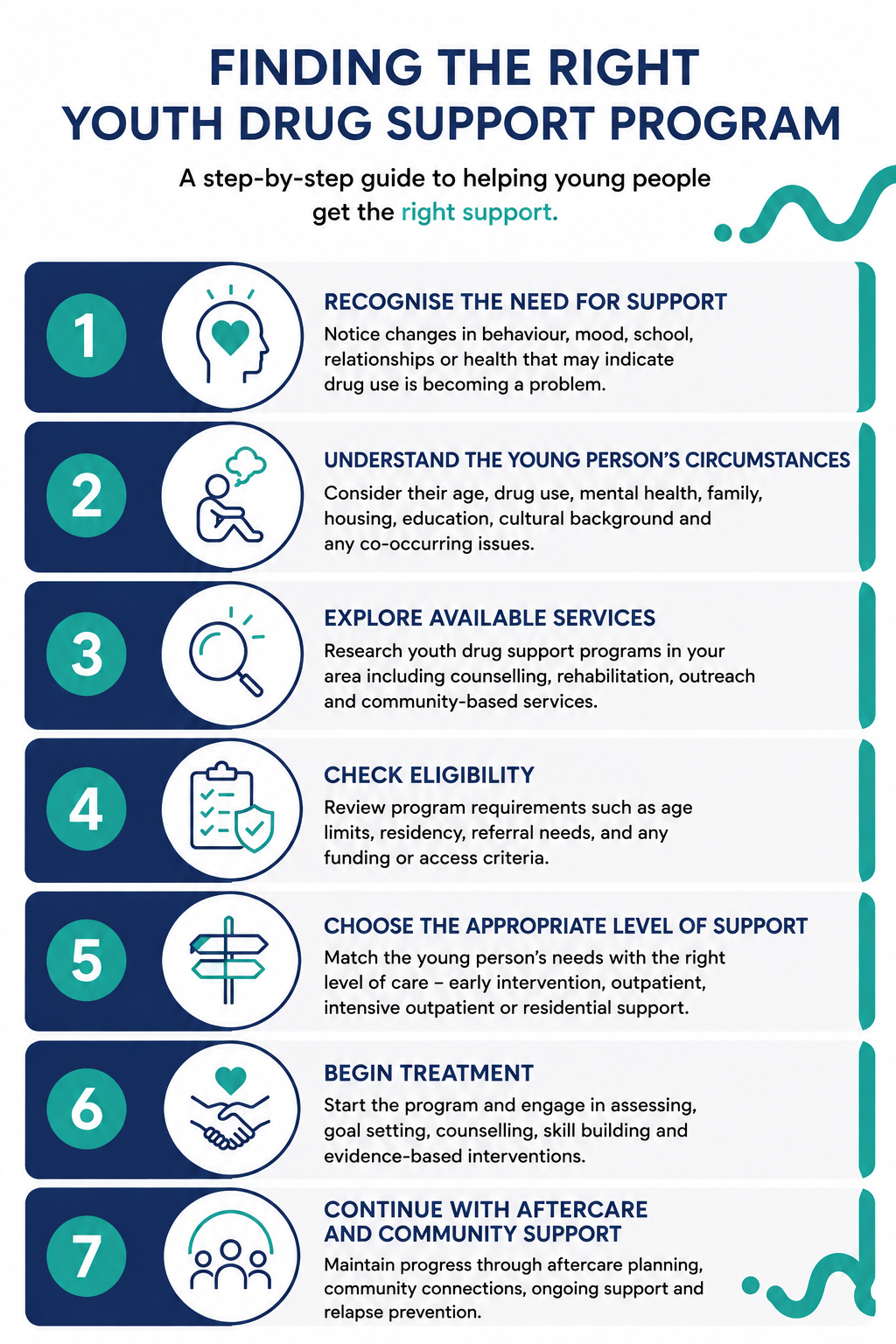
How Do You Find the Right Youth Drug Support Program in Australia?
Finding the right youth addiction support program in Australia depends on the young person’s age, drug or alcohol use, wellbeing, personal circumstances and support needs. Options can include counselling, community-based alcohol and other drug services, supported withdrawal, residential rehabilitation and aftercare. A GP or qualified alcohol and other drug service can help assess the situation and identify an appropriate next step.
What are Some Types of Youth Drug Support?
Drug and alcohol support can look very different depending on what a young person is experiencing. For some, the right starting point may be a conversation with a GP or counsellor. Others may need more structured support through a community service, outpatient treatment, withdrawal program, residential rehabilitation or hospital-based care. Peer support and recovery groups may also be helpful for some young people.
The right option will depend on the young person’s needs, circumstances and preferences, and these are just some of the types of support that may be available.
Counselling and early support
Counselling can be a useful starting point when a young person is concerned about their drug or alcohol use but may not need intensive treatment. A GP, counsellor, helpline or youth service can help them talk through what is happening, consider how it is affecting their wellbeing and relationships, and work out what kind of support might be useful next.
Community-based treatment
Community-based treatment allows young people to receive ongoing support while staying connected with home, school, work and their local community. Depending on the service, this may include counselling, case management, health care, mental health support and practical help with areas such as housing, education or employment.
Withdrawal support
Stopping or reducing some substances can cause withdrawal symptoms, and the level of support needed will vary from person to person. A doctor or alcohol and other drug service can help assess the safest approach. Healthdirect notes that withdrawal may be managed at home, in a residential service or in hospital, depending on the level of medical support and supervision required.
For young people who need residential withdrawal care, David Martin Place provides eligible young people aged 16–24 with up to 10 days of care and 24/7 medical support. Counselling, case management and other support are also available during their stay, with the next step based on each young person’s needs and goals.
Residential rehabilitation
Residential rehabilitation offers a more structured level of support for young people who need time away from their usual environment to focus on treatment and recovery. Programs can combine counselling and therapeutic support with practical help around daily routines, relationships, education and employment.
As part of Mission Australia’s Triple Care Farm, the 12-week Residential Rehabilitation Program supports eligible young people aged 16–24 through one-to-one counselling, group therapy, living skills, education and vocational training, sport and recreation.
Residential rehabilitation can be a valuable option for some young people, but it is not the right pathway for everyone. The most appropriate level of care will depend on the young person’s needs, circumstances and readiness to take part in treatment.
Aftercare
Aftercare helps young people adjust to life after more intensive treatment and continue building on the progress they have made. Support can focus on practical areas such as housing, healthcare, relationships, education and employment, as well as maintaining recovery goals in everyday life.
The Youth Network’s Aftercare Program provides up to six months of wraparound support following withdrawal and/or rehabilitation. A dedicated Aftercare Worker can help young people reconnect with services, find stable housing, return to study or work and manage the challenges that can come with returning to the community.
The type and length of aftercare will vary between services, but ongoing support can be an important part of helping young people transition out of treatment and back into daily life.
What Should You Consider When Choosing a Program?
These questions can help when speaking with a GP, counsellor or alcohol and other drug service.
1. Is the service suitable for the young person’s age? Age requirements can vary, even between youth-specific services, and not every general or all-ages service provides youth-specific care.
2. What level of care is needed? A professional may consider the substances involved, frequency of use, previous attempts to cut down or stop, withdrawal risks and the effect on daily life.
3. What else is going on? Mental health, trauma, housing, family relationships, education and employment can all influence what support will be useful.
4. How much structure would help? Options range from counselling and community appointments to withdrawal support, residential care and aftercare.
5. Can the young person access the service? Location, transport, cost, waiting periods and referral requirements matter.
6. What happens afterwards? Ask how the service plans for discharge, referrals and ongoing support.
Looking for support? Learn more about the youth-specific alcohol and drug treatment and recovery services Martin Youth Foundation helps fund, including Mission Australia’s Triple Care Farm and The Youth Network, and where to find help.
What Happens in a Youth Drug Support Program?

Most services begin with an assessment of the young person’s drug and alcohol use, health, circumstances and goals. Support may then include:
- individual or group counselling
- medical care during withdrawal where needed
- mental health support
- living skills
- education or vocational training
- sport or recreation
- family or community involvement, with the young person’s agreement
- planning for aftercare and returning to community life.
These different types of support reflect the broader approach behind youth-specific addiction treatment, which recognises that recovery can involve much more than addressing drug or alcohol use alone.
Why Can Youth-specific Care Matter?
Young people may be dealing with school, first jobs, changing relationships, housing pressures and growing independence alongside drug or alcohol concerns. Youth-specific care is designed around that stage of life, so treatment can address more than substance use alone. By bringing together support for mental health, education, employment, relationships and practical living skills, it can help young people build the confidence and stability they need to move forward.
What is Triple Care Farm?
Triple Care Farm is a youth-specific alcohol and drug treatment program for eligible young people aged 16 to 24. Mission Australia operates the program, with Martin Youth Foundation as its major philanthropic funder.
What makes Triple Care Farm different is the way it connects withdrawal, residential rehabilitation and aftercare as part of a broader recovery pathway. Young people can receive support that responds not only to drug or alcohol use, but also to areas such as mental health, relationships, education, employment and independent living.
Not every young person follows the same pathway, and eligibility and referral requirements apply. For current criteria and next steps, see how to apply to Triple Care Farm.
What Support is Available for Families?
Drug and alcohol use can affect the whole family, and parents and carers may have their own questions about what to say, how to offer support and where to turn for reliable information.
Family Drug Support Australia provides a 24-hour support line, information and programs for families and friends, while Martin Youth Foundation’s youth drug and alcohol resources bring together trusted information, support services and practical tools.
How Can a Young Person Take the First Step?
If a young person is ready to seek help, there are a few practical ways to get started.
1. Talk to someone you trust. This might be a parent, carer, teacher, youth worker, GP, counsellor or health professional.
2. Contact an alcohol and other drug service. The National Alcohol and Other Drug Hotline provides free and confidential information and support on 1800 250 015.
3. Ask practical questions. Check the age range, type of care, location, cost, waiting time, family involvement and what happens after treatment.
4. Check the application process. Some services accept direct enquiries; others require a referral or assessment.
What if a Young Person is Not Ready for Residential Treatment?
Residential rehabilitation is only one pathway. Counselling, community alcohol and other drug services, a GP, youth mental health services, family support and harm-reduction information can all provide a starting point.
A young person may also need different types of support at different stages.
What if Help is Needed Urgently?
Do not wait for a treatment application if someone is in immediate danger. Call 000 in an emergency.
For immediate crisis support, Lifeline is available on 13 11 14 and Kids Helpline on 1800 55 1800. Martin Youth Foundation’s Find Help page lists these and other current support options.
Frequently Asked Questions
What is a youth drug support program?
It is a service that helps young people with concerns related to alcohol or drug use. Support may include counselling, community care, withdrawal, residential rehabilitation or aftercare.
How do I find a youth drug support program in Australia?
A GP or alcohol and other drug service can help assess what kind of support may be appropriate and explain the options available.
Do young people need residential rehabilitation?
Not always. Many young people receive support through counselling, community treatment or other health services. Residential rehabilitation is one option when more intensive support is needed.
What is the difference between withdrawal and rehabilitation?
Withdrawal focuses on stopping or reducing alcohol or drug use safely. Rehabilitation usually involves a longer period of counselling, therapeutic support and skills development.
Can families get support too?
Yes. Family services can provide information, counselling, guidance and their own support network.
What is Triple Care Farm?
Triple Care Farm is a Mission Australia youth alcohol and drug treatment program for eligible young people aged 16 to 24. Martin Youth Foundation is its major philanthropic funder.
How old do you have to be to access Triple Care Farm?
Current eligibility information states that applicants must be aged 16 to 24 and meet the program’s other criteria.
What happens after youth drug rehabilitation?
Aftercare or community referrals can help with the transition out of treatment. Triple Care Farm’s Aftercare Program can provide up to six months of support.
Where can I get urgent help for a young person?
Call 000 if someone is in immediate danger. Lifeline, Kids Helpline and the services on Martin Youth Foundation’s Find Help page can also provide immediate or crisis support.
If you would like to learn more about Martin Youth Foundation’s role in funding services such as Mission Australia’s Triple Care Farm, contact our team
This article provides general information only and is not a substitute for professional medical or mental health advice. If you are concerned about a young person’s drug or alcohol use, speak with an appropriately qualified health professional or alcohol and other drug service.


Share this article

Other articles
New AIHW Data Reveals the State of Youth Alcohol and Drug Treatment in Australia

How Workplace Giving and Fundraising Can Support Young People in Crisis
What Is Triple Care Farm and How Does It Help Young People Recover?
Join our community
Subscribe to our newsletter for stories of impact, upcoming events, and ways to get involved.